

Let’s build something great
See how Totally’s API can support your reward and payout workflows. Talk to our team to explore your use case, or access our documentation when you’re ready to get started.
Book a Demo
How to use digital gift cards to drive activation, engagement, and retention. Five use cases, reward economics, and a 30-day experiment framework.


55% of consumers say they would try a new business because of a gift card according to TSG and Bank of America's 2026 U.S. Consumer Gift Card Study. 44% typically spend more than the card's value when they redeem. And 92% of consumers are more likely to complete a purchase when offered an incentive at the right moment.
For product teams focused on acquisition, activation, and retention, these numbers point to an opportunity that goes beyond marketing campaigns. Digital gift cards, triggered at the right moments in the user journey, can function as a behaviour-based growth engine: rewarding the specific actions that drive product adoption, building habitual engagement, and giving users a concrete reason to return.
The distinction is important. A gift card given for creating an account is a sign-up bonus. A gift card triggered when a user completes their first meaningful product interaction, maintains a seven-day streak, or refers someone who activates is a behavioural incentive that drives the metrics your product team is measured on.
This guide covers the five use cases where digital gift cards have the strongest impact on growth metrics, how to structure the reward economics, how to run a controlled experiment to measure whether it's working, and what the integration looks like in practice.
Most users drop off between registration and meaningful product usage. A user creates an account, looks around, and leaves without completing the actions that would demonstrate the product's value.
A gift card triggered at the completion of onboarding, not at registration, rewards the behaviour that converts a sign-up into an active user. The distinction matters for your economics. Paying for account creation incentivises quantity. Paying for onboarding completion incentivises activation, which is the metric that correlates with retention and lifetime value.
How to structure it: Identify the specific onboarding actions that predict long-term retention for your product. For a SaaS tool, that might be completing setup and performing the first core action. For a fintech app, completing KYC and making a first transaction. For a marketplace, creating a listing or making a first purchase. Trigger the reward after the final qualifying action, not before it.
Denomination guidance: IRF research shows that £25 is the minimum that feels meaningful in a corporate incentive context. For consumer products, £5 to £10 for onboarding activation typically moves the conversion rate without creating unsustainable cost-per-activation. Test different denominations against your control group to find the minimum effective amount, the lowest value that reliably changes behaviour.
A gift card alone does not create a daily habit. The reward loop does. The goal is to surface a reason for the user to open the app every day, then make the reward immediately claimable when earned.
Daily login streaks with escalating rewards (a small entry for day one, building toward a higher-value gift card at day seven or day fourteen) create a near-term goal that gives users a tangible reason to return. Pairing the streak with a meaningful in-product action, completing a lesson, making a transaction, submitting a review, logging a workout, prevents reward farming where users open and close the app without engaging.
How to structure it: Require both a login and a qualifying action each day. Make progress visible: "3 more days to unlock a £ 10 gift card" or "Complete today's task to keep your streak." Introduce variability through rotating brand selections or bonus multipliers on specific days to create a "check back" incentive beyond balance accumulation.
Key metric to watch: Separate logins from meaningful active sessions. The goal is increased product usage, not increased app opens. If your streak programme drives logins but not in-product activity, the reward trigger is too easy.
Referred customers deliver 25 to 37% higher lifetime value and churn 18 to 25% less than users acquired through other channels. For products facing rising acquisition costs, referral programmes with embedded gift card rewards are among the most cost-efficient growth channels available.
The mechanics that determine whether a referral programme compounds or stalls:
Double-sided rewards. Both the referrer and the referee receive a gift card. The referrer is motivated to share. The referee has a reason to activate. One-sided programmes (referrer only) generate sign-ups but not activation. Double-sided programmes generate activated users.
Instant, in-product delivery. The reward should appear inside the app for both parties the moment the qualifying action completes. A reward that arrives by email three days later has already lost the moment that would have triggered the next referral. For details on how to build instant in-app delivery through an API, see our guide on embedded rewards.
Qualification on activation, not registration. Pay the referral reward when the referred user completes a meaningful action (onboarding, first transaction, first order), not when they create an account. This aligns the programme cost with the behaviour that creates value.
Milestone rewards encourage sustained product usage by making progress tangible and rewarding continued engagement rather than one-off actions.
Tiered reward structures, Bronze, Silver, Gold, or milestone markers at specific usage thresholds, create a progression mechanic that gives users a visible path forward. A user who can see "Complete 5 more tasks to unlock a £15 gift card" has a concrete near-term goal that a user without that visibility doesn't have.
How to structure it: Define milestones around the usage patterns that indicate genuine product adoption. For a SaaS platform: completing 10, 25, 50 tasks. For a learning app: finishing modules or levels. For a fintech: reaching savings targets or transaction frequency thresholds. Increase the reward value at each tier to reflect the deeper engagement it represents.
Where to use milestones beyond engagement: Work anniversaries and tenure milestones for platforms with an employee or HR component. Anniversary rewards for subscription products at renewal points. Long-term customer recognition for marketplaces and platforms. For more on how fintechs are using milestone rewards, we've covered the specific use cases in a separate post.
Every product has dormant users. People who registered, used the product for a period, and went quiet. A targeted gift card incentive gives them a specific, time-limited reason to return and re-engage.
Win-back campaigns work best when they're personalised based on the user's previous behaviour. A user who was active in one product area receives a gift card connected to that area. A user who completed onboarding but never made a purchase receives an incentive tied to their first transaction. Generic "we miss you" messaging without a tangible incentive is easy to ignore.
How to structure it: Define dormancy thresholds (7 days inactive, 14 days, 30 days) and trigger different offers at each stage. Front-load the incentive: longer dormancy periods typically require higher denomination offers to reactivate. Set a time limit on the offer to create urgency. Track whether reactivated users remain active after the incentive period ends, because a win-back that creates a single return visit without sustained re-engagement is a cost, not a recovery.
Gift cards introduce a direct incentive cost. The programme is economically sound when the incremental value created by the rewarded behaviour exceeds the fully loaded cost of the reward.
Cost per incremental activated user = (Rewards issued + platform fees + fulfilment + fraud losses) ÷ Incremental activated users
The critical word is incremental. Some users would have activated, referred, or returned without the incentive. The programme should be measured against the additional users it creates, not the total number who receive a reward.
This is illustrative and the numbers will differ for every product, but the framework applies universally.
In this example, the programme costs £110,000 in total and generates 4,000 users who would not otherwise have activated. If an activated user has an expected lifetime contribution margin of £20, the expected return is £80,000 from incremental activations alone. The programme becomes positive when you factor in retained revenue, referrals from activated users, and expansion over time.
The practical takeaway: reward size should be set from expected lifetime value, gross margin, and conversion sensitivity, not from a "£10 sounds about right" assumption. Test denominations against a control group and find the minimum effective incentive.
Paying a full gift card value for every login creates high cost with limited incremental value. A stronger structure uses small daily entries or progress points that accumulate toward a higher-value gift card at streak completion.
If a daily check-in paired with one qualifying in-product action produces a £0.20 expected reward cost and increases expected contribution by £0.35 per incremental active day, the mechanic is sustainable. If it merely pays users to open the app without changing downstream behaviour, it's a cost without a return.
Tie rewards to business-value actions. Onboarding completion, first transaction, referral activation, feature adoption, retention milestones. Not sign-up, not app open, not email click.
Pay in stages. A small reward at activation, a larger reward after the user demonstrates sustained value. This aligns cost with retention rather than front-loading spend on users who may not stay.
Use the minimum effective incentive. Test £5 versus £10 versus £15 across identical cohorts. The optimal denomination is the lowest value that reliably changes behaviour, not the highest amount you can afford.
Cap exposure. Set per-user, per-household, and per-device limits. Without caps, reward programmes attract fraud and multi-account abuse at scale.
Deliver instantly. Real-time fulfilment at the moment of completion reinforces the behavioural connection. A delay between the action and the reward weakens the reinforcement. For details on how to implement instant delivery through an API integration, see our API vendor evaluation guide.
Rotate the catalogue. Changing brand selections, categories, or bonus offers periodically creates a reason to check back beyond reward accumulation. 68% of consumers now prefer digital gift cards over physical according to Fiserv's 2025 Prepaid Consumer Insights Survey, and choice of brand is a significant driver of satisfaction.
Before committing to a full programme, run a controlled experiment to measure the incremental impact.
Split your user base into three cohorts over a 30-day period.
Control group: No gift card incentives. Standard product experience.
Group A — Login rewards: Users receive a small reward for daily login streaks (login plus one qualifying in-product action).
Group B — Activity rewards: Users receive rewards for completing specific high-value actions (onboarding, feature adoption, referral, milestone).
The experiment answers two questions. First, do gift card incentives increase the target metrics above the control group? Second, which incentive model (login-based or activity-based) produces the stronger incremental lift per pound of reward spend?
Watch for the difference between Group A and Group B. If login rewards increase opens but not in-product activity, the reward trigger is too easy. If activity rewards increase both engagement and downstream metrics (retention, referral, feature adoption), the programme is driving genuine product usage rather than superficial logins.
Run the experiment for a full 30 days. Shorter windows don't give enough time for streak and habit mechanics to take effect. After the test period, monitor whether the behavioural changes persist when rewards are reduced or removed. Sustained behaviour change after incentive reduction is the strongest signal that the programme built habits rather than rented attention.
Totally provides the infrastructure for product teams that want to use digital gift cards as a behavioural incentive system rather than a standalone gift.
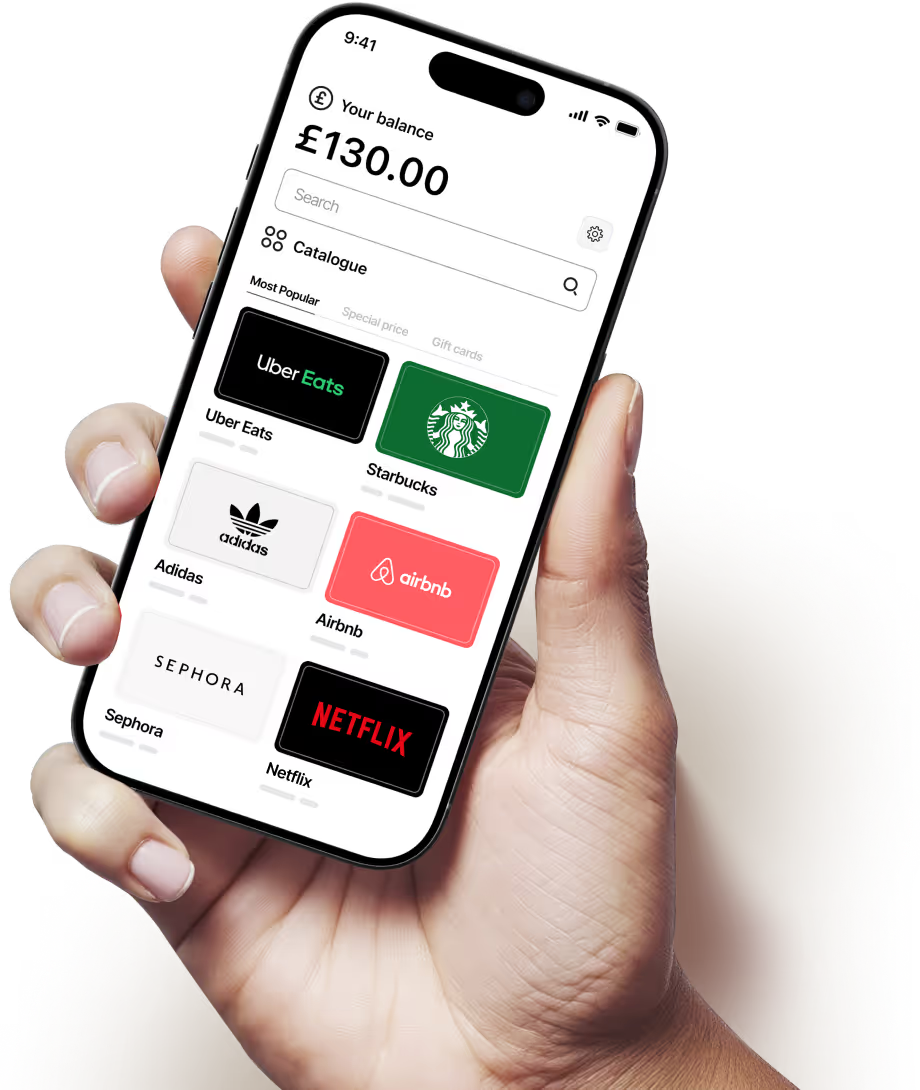
3,000+ brands across 50+ countries. The catalogue surfaces locally relevant brands automatically based on the recipient's location and currency. Multi-choice options let users select the brand that's meaningful to them.
Event-triggered delivery via API. Define triggers for any user action: onboarding completion, streak milestone, referral conversion, feature adoption, reactivation. The API handles fulfilment automatically when the event fires.
You control the experience. The API returns reward data to your backend. Your product team decides how and where the reward appears in the user journey. No auto-emails. No external redirects.
No API fees. No platform fees. No subscriptions. Transparent pricing at face value. The cost model supports experimentation: test different denominations, triggers, and cohorts without per-transaction charges inflating the experiment cost.
Real-time tracking. Delivery status, redemption rates, brand selection data, and programme spend. Feed this data into your product analytics to optimise the programme continuously.
Sandbox and documentation. A full sandbox environment and publicly available API documentation for your engineering team to evaluate and test before committing.
Want to explore how digital gift cards could drive adoption and engagement in your product? Talk to Totally
Frequently Asked Questions
How do digital gift cards drive user acquisition?
55% of consumers say they would try a new business because of a gift card. When triggered at onboarding completion rather than registration, gift cards incentivise activation rather than sign-up volume, which aligns the programme cost with users who are likely to retain.
Can gift cards increase daily active users?
Yes, when paired with streak mechanics that require both a login and a qualifying in-product action. The reward loop (visible progress toward a gift card, escalating value at longer streaks) creates a near-term goal that drives habitual engagement. Separate logins from meaningful sessions to ensure the programme drives product usage, not app opens.
How much should you spend on gift card incentives per user?
Start with the minimum effective incentive: the lowest denomination that reliably changes behaviour. Test £5 versus £10 across identical cohorts. Set the reward from expected lifetime value and gross margin rather than an arbitrary amount. IRF research shows £25 is the minimum that feels meaningful in corporate contexts, but consumer product incentives can work at lower denominations.
How do you measure whether gift card incentives are working?
Run a controlled experiment with three cohorts: control (no incentives), login rewards, and activity rewards, measured over 30 days. Track activation rate, D7/D30 retention, average daily logins, meaningful actions per session, and cost per incremental active user. The programme works when the incremental value exceeds the fully loaded reward cost.
What's the difference between a sign-up bonus and a behaviour-based reward?
A sign-up bonus pays for account creation regardless of what happens next. A behaviour-based reward pays for a specific action that predicts retention and lifetime value (onboarding completion, first transaction, streak maintenance, referral activation). The first inflates registration numbers. The second drives the metrics that grow the business.
How do you prevent fraud in a gift card reward programme?
Set per-user, per-household, and per-device limits. Require verified identity and unique devices. Tie rewards to meaningful in-product actions rather than easily automated triggers. Monitor for duplicate accounts, self-referrals, and bot behaviour. Build redemption thresholds that require accumulated engagement before users can claim rewards.
What does the API integration look like?
Your product defines the behavioural triggers. The API handles catalogue access, reward delivery, and tracking. Totally's API provides event-triggered delivery across 3,000+ brands in 50+ countries with no API fees, a sandbox for testing, and real-time tracking. Most teams move from API access to live programme within four to eight weeks.