

Let’s build something great
See how Totally’s API can support your reward and payout workflows. Talk to our team to explore your use case, or access our documentation when you’re ready to get started.
Book a Demo
A practical guide to embedding digital rewards into your product through a single API integration.


Embedded finance is a $185 billion opportunity for B2B SaaS platforms, with less than 20% of that currently captured. Within that, embedded rewards, the ability to trigger digital gift cards, cashback, or incentive payouts natively inside a product rather than through a separate system, is one of the fastest-growing categories.
The shift is structural. Users expect seamless experiences. Being redirected to an external site to claim a reward breaks the flow, erodes trust, and hands behavioural data to a third party. Platforms that embed rewards directly into their product keep users engaged, capture first-party data on what drives action, and create a loyalty mechanic that compounds over time rather than existing as a one-off gesture.
Brands with strong loyalty programmes retain 89% of customers compared to 33% for those without. Loyalty programme members who redeem rewards spend 3.1x more annually than non-redeemers. And personalised rewards increase engagement by 40% in B2B programmes.
For product owners, founders, and product marketing teams evaluating how to build rewards into their product, this guide covers where embedded rewards create the most value, what a rewards API actually handles, how to evaluate suppliers, and how Totally's API provides the infrastructure layer that makes it work.
Embedded rewards are incentives integrated directly into a product's user experience rather than managed through a separate programme or external redirect.
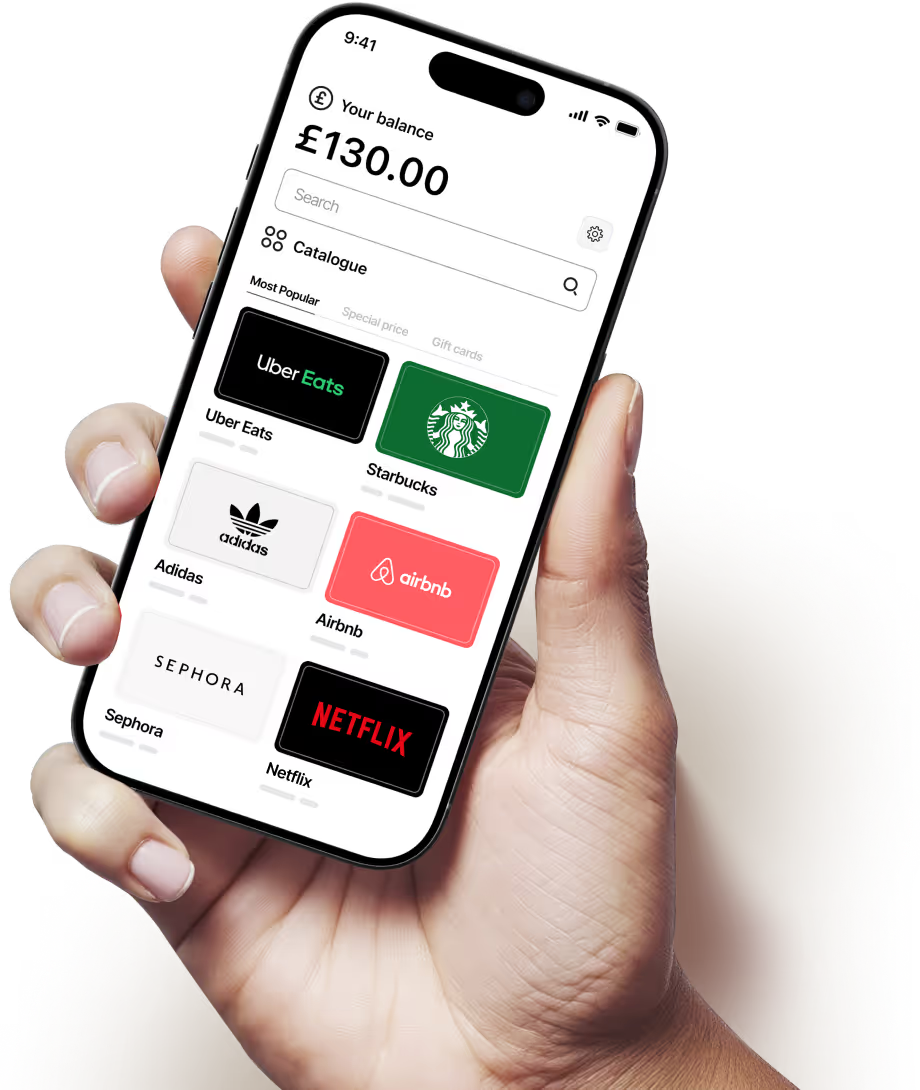
In practice, this means a user earns, selects, and redeems a reward inside the product they're already using. The backend handles supplier aggregation, catalogue management, compliance, fulfilment, and settlement invisibly. The user never leaves the app. The product team controls the entire experience.
This is different from bolting a third-party rewards page onto your product and linking to it. That model creates friction (the user leaves your environment), surrenders data (the third party captures redemption behaviour), and feels disconnected from the core product experience.
Embedded rewards make the incentive feel like a native feature rather than a bolt-on, which is what drives the engagement and retention outcomes that justify the integration.
Embedded rewards aren't limited to one industry or product type. The format applies wherever a platform wants to influence user behaviour at a specific moment.
SaaS churn remains one of the hardest problems in the industry. Monthly churn rates range from 3-5% for SMB products to 1-2% for enterprise. A 5% improvement in retention can increase profits by 25 to 95% according to Harvard Business Review research.
Embedded rewards give SaaS platforms a retention lever that sits inside the product experience. Rewarding usage milestones, feature adoption, referrals, or subscription renewals creates positive reinforcement at the moments that most influence whether a user stays or churns. The reward is delivered within the product, reinforcing the connection between the platform and the value the user receives.
Two-sided marketplaces need to incentivise activity on both sides. Embedded rewards can drive seller onboarding, buyer engagement, transaction completion, and referrals without requiring users to leave the platform.
A marketplace that rewards a seller for completing their first 10 transactions with a digital gift card delivered inside the platform creates a milestone experience that feels like part of the product. The same reward delivered via a separate email from a third-party provider feels disconnected and is easily ignored.
Fintech platforms use embedded rewards for cashback programmes, savings milestones, transaction-based incentives, and onboarding completion. 64% of consumers aged 18-44 prefer rewards that work across multiple brands rather than being locked to one, which makes multi-choice digital gift cards a natural fit for fintech reward programmes.
The rewards API integrates into the existing financial workflow: a transaction triggers a reward, which appears in the user's in-app experience, without redirecting them to an external catalogue or separate redemption site.
HR technology platforms, from HRIS systems to engagement tools, increasingly embed recognition and rewards as a native feature. Rather than requiring organisations to procure and manage rewards separately, the platform offers automated, trigger-based reward delivery as part of its core functionality.
This extends the platform's value proposition beyond its primary function (payroll, absence management, engagement surveys) into recognition and retention, which are among the highest-priority concerns for HR teams using the platform.
Loyalty and CRM platforms embed rewards to increase programme engagement and redemption rates. When the reward selection, redemption, and delivery happen inside the platform rather than through an external redirect, engagement rates are consistently higher because the friction between earning and enjoying the reward is eliminated.
66% of consumers modify their spending to earn rewards faster according to Bain & Company research. Embedding the reward experience into the platform where spending happens accelerates that behaviour.
A rewards API connects your product to the reward catalogue and fulfilment infrastructure. Your product team controls the front-end experience. The API handles everything behind it.
Catalogue access. A single integration provides access to digital gift cards, prepaid cards, and reward options across multiple brands, categories, countries, and currencies. Your product team doesn't need to negotiate with individual brands or manage supplier relationships.
Event-triggered delivery. Define the triggers within your product (a milestone reached, a transaction completed, a referral converted, an onboarding step finished) and the API delivers the appropriate reward automatically when the event fires. No manual processing per reward.
Localisation. For products serving users in multiple countries, the API handles local brand availability, local currency denomination, and jurisdiction-level compliance automatically. A user in the UK sees UK brands in GBP. A user in Germany sees German brands in EUR. Your product team doesn't need to build or maintain separate catalogues per market.
Fulfilment and delivery. The API handles the entire fulfilment chain: reward selection, code generation, secure delivery, and redemption tracking. Your product receives the reward data (a voucher code, a secure redemption URL, or a direct-to-user delivery) depending on how you want to build the user experience.
Tracking and analytics. Every reward triggered, delivered, and redeemed is tracked through the API, giving your product team visibility into which rewards drive the most engagement, which user segments respond most strongly, and how the programme performs against retention and conversion goals.
Before committing to a supplier, product teams should have clear answers to these six questions. They determine whether the integration will be seamless or create ongoing operational friction.
Totally provides the API infrastructure that product teams need to embed rewards into their platform without building or managing the reward supply chain, compliance layer, or fulfilment operations.
3,000+ digital gift card brands across 50+ countries. Retail, dining, entertainment, gaming, streaming, experiences, wellness, and prepaid Visa and Mastercard. The catalogue surfaces locally relevant brands automatically based on the end user's location.
Single integration, global coverage. One API connection provides access to the full catalogue across all supported markets. No need to integrate with multiple suppliers or manage brand relationships individually.
You control the experience. The API returns reward data to your backend. Your product team decides how and where the reward appears in the user journey. Build a native in-app reward experience that matches your product's design system and user flow.
Event-triggered automation. Define triggers based on any event in your product: a milestone reached, a transaction completed, a referral converted, an onboarding step finished. The API handles fulfilment automatically when the event fires.
Multi-currency and multi-market. Rewards are denominated in the end user's local currency with locally relevant brands. Compliance is managed at the jurisdiction level across all supported markets. ISO 27001 certified, GDPR and CCPA compliant.
Real-time tracking. Full lifecycle visibility: order, delivery, redemption, and programme-level analytics. Feed this data back into your product to optimise which rewards, denominations, and triggers drive the strongest engagement.
Sandbox and documentation. A full sandbox environment for your engineering team to test against, with publicly available API documentation covering endpoints, authentication, catalogue queries, order management, and status tracking.
Most embedded reward integrations follow a three-phase approach.
Phase 1: Define the reward moments. Identify the user behaviours you want to incentivise. Map each behaviour to a reward trigger and determine the appropriate denomination and catalogue scope. Start with one or two high-impact triggers rather than building a comprehensive programme from day one.
Phase 2: Integrate and test. Connect to Totally's API using the sandbox environment. Build the front-end reward experience within your product. Test the full flow: trigger fires, API call, reward returned, user sees the reward, user redeems. Iterate on the experience based on testing feedback.
Phase 3: Launch and optimise. Go live with your initial triggers. Monitor redemption rates, user engagement, and downstream metrics (retention, referral rates, transaction frequency). Use the data to refine which triggers, denominations, and reward options drive the strongest outcomes. Expand the programme to additional triggers and user segments based on what the data shows.
The integration timeline depends on engineering capacity and the complexity of the front-end experience. Product teams typically move from API access to live programme within four to eight weeks.
Want to explore how embedded rewards would work in your product? Talk to the Totally Team or start with our API documentation.
What is a rewards API?
A rewards API allows businesses to integrate digital gift card delivery, incentive fulfilment, and reward catalogue access directly into their own products, apps, or platforms. Instead of managing rewards separately, the product triggers and delivers incentives automatically as part of the user experience.
How does a rewards API work?
The API connects your product to a reward catalogue and fulfilment infrastructure. Your product defines triggers (a milestone, a transaction, a referral). When the trigger fires, the API delivers the reward, either as a voucher code returned to your backend or as a direct delivery to the user, depending on how you've built the experience.
What can you do with a rewards API?
Embed rewards into products, automate incentive delivery based on user behaviour, deliver digital gift cards across 50+ countries, track redemption and programme performance, and build native reward experiences that keep users inside your platform.
Can a rewards API support global programmes?
Yes. Totally's API provides access to 3,000+ brands across 50+ countries through a single integration. The catalogue surfaces locally relevant brands and denominates in local currency automatically based on the end user's location.
Do you need developers to integrate a rewards API?
Yes. API integration requires development resources to connect your product to the rewards infrastructure and build the front-end experience. Totally provides a sandbox environment for testing and publicly available API documentation to support the engineering team.
How long does a rewards API integration take?
Product teams typically move from API access to a live programme within four to eight weeks, depending on engineering capacity and the complexity of the front-end reward experience.
What's the difference between embedded rewards and a traditional loyalty programme?
Traditional loyalty programmes typically operate as separate systems with their own interfaces, requiring users to leave the core product to earn or redeem rewards. Embedded rewards are integrated directly into the product experience, triggering and delivering incentives within the user's existing workflow. This reduces friction and increases engagement because the reward feels like a native feature rather than a separate programme.