.png)

Let’s build something great
See how Totally’s API can support your reward and payout workflows. Talk to our team to explore your use case, or access our documentation when you’re ready to get started.
Book a Demo
For gig workers, the gap between finishing a job and accessing the money they've earned can mean the difference between making rent and missing it. Platforms that close that gap retain more workers, reduce turnover costs, and build a reputation that competitors struggle to match.

.png)
When a gig worker finishes a delivery, completes a shift, or submits a freelance project, they've done the work. The money is earned. But on most platforms, accessing that money takes three to five days, sometimes longer. In the meantime, there's petrol to buy, childcare to cover, and rent due at the end of the month. The gap between earning and receiving creates a financial pressure that shapes how workers choose platforms, how long they stay, and how engaged they are while they're there.
The global gig economy is projected to reach $674 billion in 2026, growing at nearly 16% annually. In the UK, 30% of workers are now engaged in some form of gig or freelance work. In the US, that figure is approaching 36%, with projections suggesting freelancers will represent close to half the total workforce by late 2026. The scale of this shift means the financial infrastructure serving these workers has become a strategic question for any platform, agency, or business that relies on flexible labour.
84% of gig workers say that fast access to earnings is important or very important when deciding which platform to work for. That puts payout speed on the same level as base pay and job availability. And yet only 36% of gig platforms consistently offer instant payouts. The remaining 64% still rely on weekly or bi-weekly bank transfers. That gap represents a real problem for workers and a significant opportunity for platforms willing to close it.
The push for faster payouts makes more sense when you look at how gig workers actually manage their finances day to day.
Unlike salaried employees who receive a predictable amount on a predictable date, gig workers piece together income from multiple sources across varying timelines. A delivery driver might earn from two different platforms in a single day. A freelance designer might complete three projects in a week, each with different payment terms. The income is real, but access to it is fragmented and delayed.
For many of these workers, the financial runway is short. Half of UK gig workers end up earning below minimum wage once expenses and downtime are factored in, with average hourly earnings sitting around £8.97 against a legal minimum of £10.42. When margins are that tight, a three-day payment delay can mean choosing between filling the tank to do tomorrow's deliveries or buying groceries for the family. 76% of UK gig workers report feeling uncertain about their job security, and that financial anxiety doesn't stay contained. It affects how many hours they're willing to work, how they rate service quality, and ultimately whether they stay on your platform or try the one that pays faster.
The 2025 Gig Driver Report found that drivers receiving same-day pay reported 13 percentage points higher satisfaction than those on weekly payment cycles. The same research found that 7 in 10 drivers want their money within 24 hours of earning it. And one finding that stood out: a platform paying £18 per delivery with instant access retains workers more effectively than one paying £20 with weekly bank transfers. Workers are accepting less money in exchange for getting it sooner, which says a great deal about how central payout speed has become to their decision-making.
If faster payouts are so clearly what workers want, the obvious question is why 64% of platforms are still running weekly or bi-weekly cycles. The barriers are real, and understanding them matters if you're evaluating whether and how to make the shift.
Cash flow timing. For many platforms, holding payouts for a few days creates a buffer that helps manage operational expenses. Switching to instant or same-day payouts means funding those payments in real time, which requires different treasury management and potentially different financing arrangements. For smaller platforms especially, this is a genuine operational consideration rather than an oversight.
Payment infrastructure. Building instant payout capability requires integration with real-time payment rails, push-to-card networks, or digital wallet providers. Each comes with its own technical requirements, compliance obligations, and fee structures. Some platforms that do offer "instant" pay charge workers $1.50 to $3.00 per withdrawal, which creates friction and reduces adoption. Others limit instant access to specific daily windows rather than providing true real-time settlement.
Cross-border complexity. For platforms operating across multiple countries, the challenge multiplies. Payment methods, processing times, local regulations, tax treatment, and currency conversion all vary by market. What works for paying a driver in Birmingham doesn't apply to a freelancer in Berlin or a delivery rider in Dubai. Each jurisdiction has its own compliance requirements, and getting any of them wrong creates legal and financial risk.
Fraud and verification. Faster payouts also mean less time for fraud detection and verification. Platforms need to balance speed with security, ensuring that instant payments don't open the door to fraudulent claims or identity issues.
These are legitimate challenges. But the platforms that solve them gain an advantage that compounds over time, because the infrastructure investment creates a barrier that slower competitors can't replicate quickly.
Worker satisfaction matters on its own terms, but there's also a hard financial argument for faster payouts that connects directly to platform economics.
Turnover is expensive. Worker turnover in the gig economy exceeds 90% annually on some platforms. Replacing a single worker costs between $3,000 and $5,000 when you factor in recruitment, background checks, onboarding, and lost revenue during the vacancy. Even a modest reduction in churn driven by faster payouts creates meaningful savings across a workforce of thousands.
Idle workers cost revenue. Gig platforms generate revenue when workers are active and completing jobs. When someone stops working for three days because they're waiting for a payout to clear so they can afford fuel, the platform loses revenue alongside the worker. Instant access to earnings keeps workers available and active, which means more completed jobs, more customer transactions, and more platform revenue flowing.
Payout speed works as a recruitment lever. In a market where workers choose between multiple platforms, payout speed is one of the few differentiators available to mid-size platforms competing against incumbents with larger brand recognition and market share. You might not be able to match a major platform's job volume, but you can compete on how quickly and reliably you pay.
Financial security improves service quality. Workers who feel financially supported by their platform tend to deliver better service, maintain higher ratings, and take on more jobs. The connection between financial security and work quality is direct. When someone can cover their immediate expenses without anxiety about when their earnings will arrive, they're more present, more professional, and more willing to go further for a customer.
The platforms getting this right share a few characteristics in how they've built their payout systems.
Multiple payout methods, not just one. Different workers prefer different channels. Some want funds pushed to a debit card instantly. Others prefer a digital wallet. Some need prepaid cards, particularly workers who are unbanked or underbanked and don't have a traditional bank account to receive transfers into. And some are comfortable with next-day bank transfers if the cost is lower. Offering a range of options and letting workers choose based on their own circumstances creates a better experience than forcing everyone through the same channel.
Minimal or zero fees for instant access. Platforms that charge $2 or $3 per instant withdrawal are technically offering fast payouts, but the fee falls hardest on the workers who can least afford it. The people most likely to use instant pay are the ones with the tightest cash flow, which means the fee disproportionately affects the workers who need the service most. Platforms that absorb the cost or keep fees negligible see significantly higher adoption and stronger retention.
Localised for each market. A UK worker expects to receive pounds to their bank account or card. A worker in the Middle East might prefer a digital wallet. A freelancer in Southeast Asia might need mobile money. Payout infrastructure that adapts to local preferences and regulatory requirements market by market performs better than a single global approach that creates friction everywhere.
Compliance built into the payment flow. Tax reporting, regulatory requirements, anti-money-laundering checks, and data protection obligations all vary by jurisdiction. Platforms that try to manage this manually across multiple countries inevitably run into problems. Embedding compliance into the payment infrastructure itself, so that each payout automatically accounts for local requirements, removes a category of risk that grows with every new market.
Real-time visibility for workers. Workers want to know how much they've earned, when payment was sent, and when it'll arrive. A dashboard or notification system that provides this transparency reduces support queries and builds trust. When someone can see that their earnings are already on the way, the anxiety of waiting drops, even if the actual transfer takes an hour rather than 30 seconds.
The regulatory environment around gig worker payments is evolving in ways that will make faster, more flexible payouts increasingly necessary rather than optional.
The EU Platform Work Directive requires all member states to implement new protections for gig workers by December 2026, including provisions around payment transparency and worker rights. The UK's Employment Rights Bill is expected to introduce new requirements for platforms and agencies employing gig and temporary workers. And across multiple jurisdictions, there's growing pressure on platforms to treat payout infrastructure as a core obligation rather than a back-office afterthought.
For platforms that have already invested in modern payout infrastructure, these regulatory changes are manageable. For those still running on legacy payment systems and manual processes, the compliance burden is about to increase. Getting ahead of this reduces the risk of scrambling to meet requirements on tight implementation timelines, and means the infrastructure you build now serves both operational and regulatory purposes.
Totally gives gig platforms, staffing agencies, and businesses paying freelance or temporary workers the infrastructure to deliver fast, flexible payouts across multiple markets without the operational complexity of building it in-house.
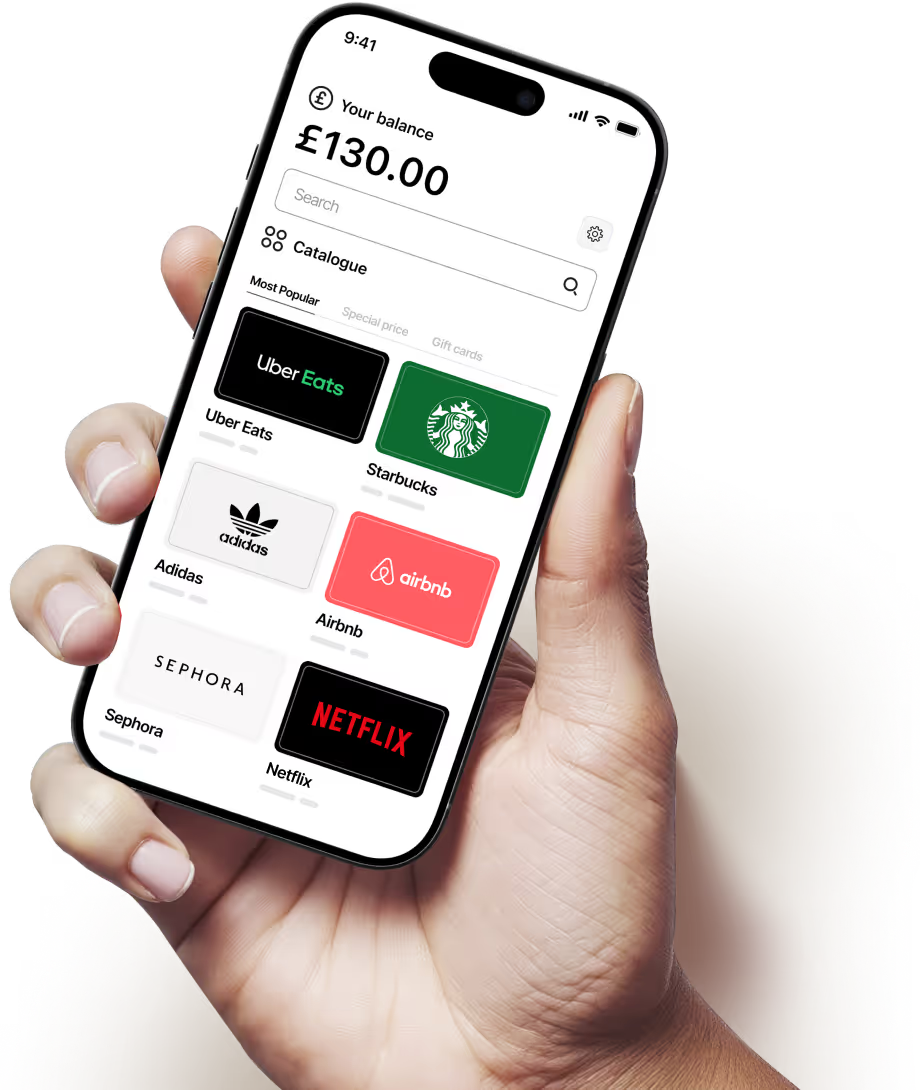
That means instant digital payouts through 3,000+ gift card brands, prepaid Visa and Mastercard options that give workers the freedom to spend anywhere, and multi-choice experiences where recipients pick the format that works best for them. Payouts can be delivered across 50+ countries with local currency support, so a platform operating in the UK, Europe, and the Middle East can run a single payout programme that adapts to each market automatically.
Totally's API integrates into existing platform systems, enabling automated, event-driven payouts triggered by job completion, milestone achievement, or any other event without manual processing. Compliance, financial reconciliation, and spend tracking are built into the platform, giving operations teams full visibility without the need to manage separate systems or spreadsheets alongside their payment flows.
For platforms where payout speed and reliability directly affect worker retention and engagement, Totally provides the infrastructure to make instant, flexible payouts a standard part of the worker experience rather than a technical project that never gets prioritised.
If you're running a platform that pays gig workers, freelancers, or temporary staff and you're still relying on weekly or bi-weekly bank transfers, the case for moving faster is well supported by both worker expectations and platform economics.
Start by understanding what your workers actually want. Survey them on payment preferences, timing, and pain points. The answers will likely confirm what the industry data shows: speed and flexibility matter as much as the amount being paid.
Then assess your current payout infrastructure against what the market now expects. Can you pay out same-day? Can you offer multiple payout methods? Can you handle cross-border payments without creating manual work for your operations team? The gaps you find will point to where investment will have the most immediate impact on retention and worker satisfaction.
Want to see how Totally can power instant, flexible payouts for your gig workforce? Drop us a note!
.avif)