.png)

Let’s build something great
See how Totally’s API can support your reward and payout workflows. Talk to our team to explore your use case, or access our documentation when you’re ready to get started.
Book a Demo
Your brain responds to a reward before you even receive it. Three neuroscience principles, anticipation, prediction error, and mental accounting, explain why some rewards create lasting brand moments and others disappear without trace.


When someone opens an email and finds a gift card waiting for them, something specific happens in their brain before they even click the redemption link. Dopamine, the neurotransmitter most associated with motivation and pleasure, begins firing not at the moment they receive the reward, but at the moment they anticipate what they'll do with it. The browsing, the choosing, the imagining of what they'll spend it on. That anticipation phase is where the strongest neural response occurs, and it's the phase that most reward programmes accidentally skip.
Marketers spend considerable time deciding what reward to offer, how much it should be worth, and who should receive it. Those are important decisions. But the neuroscience suggests that how a reward is presented, when it arrives, and how the experience of receiving it is structured can matter as much as the reward's face value. A £25 gift card delivered with thought, timing, and personalisation can create a stronger response than a £50 cash credit that arrives as a line item on a statement.
94% of customers who receive a surprise gift or special recognition feel more positive about the company that gave it to them, and 34% say the experience led them to give that company more business. 67% of consumers say surprise gifts are very important to their brand experience. These numbers reflect something deeper than simple gratitude. They reflect how the brain's reward circuitry processes the experience of being surprised, valued, and given permission to enjoy something.
This piece explores three specific neuroscience principles that shape how people experience rewards, and how marketers can apply each one to design programmes that drive stronger acquisition, retention, and brand affinity.
The brain's reward system doesn't wait for the reward to arrive before it responds. Dopamine starts firing during anticipation, when the brain predicts that something pleasurable is coming. Research on the mesolimbic dopamine pathway shows that the anticipation phase often generates a stronger neural response than the consumption phase. The brain is more activated by the prospect of reward than by the reward itself.
This has a direct implication for how rewards are designed and delivered.
A cash rebate that appears silently as a statement credit creates almost no anticipation. The customer may not even notice it. The reward arrives and is consumed (absorbed into their balance) in the same moment, with no anticipation window in between. The dopamine response is minimal because there was no prediction, no buildup, and no moment of imagining what the reward would feel like.
A gift card delivered with context ("you've earned this" or "we picked this for you") opens an anticipation window. The recipient sees the reward, begins thinking about what they'll choose, imagines the experience of redeeming it, and then goes through the process of browsing and selecting. Each of those steps activates the reward circuitry. The dopamine response isn't a single spike. It's a sustained engagement that stretches across minutes or hours as the recipient moves from awareness to anticipation to selection to redemption.
What this means for programme design. Build anticipation into the reward experience rather than delivering rewards as invisible transactions. Let people know a reward is coming before it arrives. Create a selection process that extends the anticipation window. And present the reward in a way that triggers the imagination: "choose something you've been wanting" activates more anticipation than "your £25 credit has been applied."
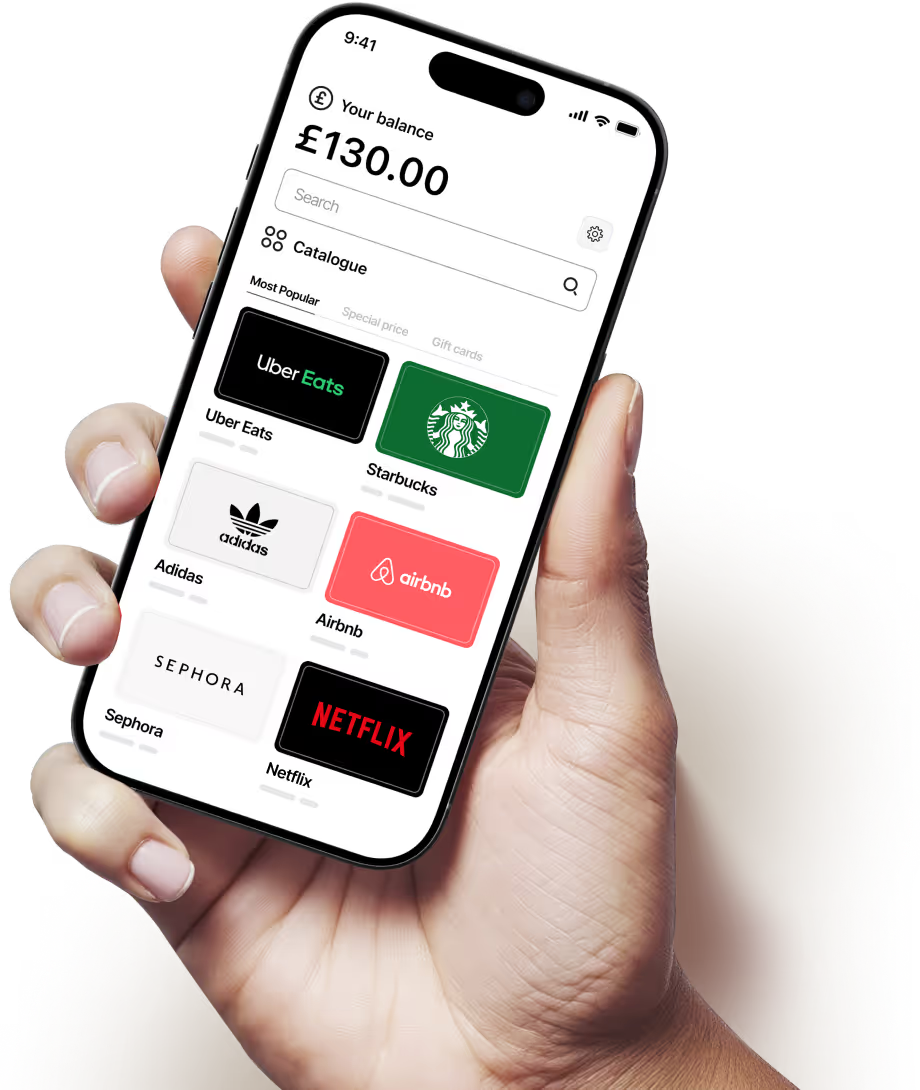
Multi-choice rewards are particularly effective here because the act of browsing and choosing extends the anticipation phase. The recipient isn't just receiving a reward. They're actively engaging with it, imagining possibilities, and eventually selecting something they genuinely want. That extended engagement is what creates the sustained dopamine response that a simple cash transfer never generates.
One of the most well-established findings in reward neuroscience is the concept of prediction error. When a reward matches what the brain expected, dopamine fires at a baseline level. When a reward is better than expected, dopamine spikes significantly above baseline. And when a reward is worse than expected, dopamine drops below baseline.
This means that unexpected rewards, ones the recipient didn't see coming, create a stronger neural response than predictable rewards of equal or even higher value. A £10 gift card that arrives as a genuine surprise can generate more positive feeling and brand association than a £25 reward the customer was expecting.
The practical applications for marketers are significant.
Surprise rewards outperform scheduled ones on engagement. A loyalty programme that delivers a predictable reward at a predictable interval (buy 10 coffees, get one free) creates an expectation. The 11th coffee feels like a fulfillment of a contract, not a gift. The dopamine response is modest because the brain predicted exactly this outcome. By contrast, an unexpected reward at an unexpected moment ("we noticed you've been with us for 6 months, here's something to say thanks") triggers positive prediction error. The reward wasn't anticipated, so its neural impact is amplified.
Variable rewards sustain engagement longer than fixed ones. Research on reinforcement schedules consistently shows that variable, intermittent rewards maintain higher levels of engagement over time than predictable, fixed-interval rewards. The brain stays attentive and engaged because it can't predict exactly when the next reward will come. For loyalty and retention programmes, introducing occasional surprise rewards alongside the structured programme creates a layer of unpredictability that keeps customers engaged and attentive to the brand.
The "better than expected" effect. When a customer expects a generic thank-you email and instead receives a personalised gift card to a brand they love, the prediction error is positive and the dopamine response reflects it. Personalisation amplifies surprise because it signals that the reward was chosen with the individual in mind, which is inherently less predictable than a one-size-fits-all approach. 83% of customers expect personalised experiences from their favourite brands, but when that personalisation extends to an unexpected reward moment, the combination of meeting the personalisation expectation while exceeding the reward expectation creates a powerful response.
Building on Richard Thaler's mental accounting framework (which we explored in depth in our piece on gift cards versus cash), the brain categorises incoming money and rewards into different mental buckets based on their source and perceived purpose.
Cash and cash-equivalent rewards (statement credits, account adjustments, rebates) land in the "income" or "salary" mental bucket. They get spent on necessities and absorbed into routine spending. The reward is economically valuable but emotionally invisible.
Gift cards land in the "windfall" or "treat" mental bucket. The brain categorises them as separate from regular income, which creates psychological permission to spend on something enjoyable rather than something necessary. That permission is what makes the spending experience pleasurable, and it's that pleasure that creates the positive brand association.
Research shows that recipients irrationally value gift cards approximately 22% higher than equivalent cash, a phenomenon explained by the endowment effect. And 42% of gift card recipients redeem within two weeks, compared to cash which often sits in accounts for months, suggesting that gift cards create a sense of excitement and urgency that cash doesn't generate.
What this means for programme design. The format of your reward determines which mental bucket it lands in, which determines how the recipient experiences it, which determines whether they associate positive feeling with your brand. If you want your reward to feel like a gift (creating warmth, gratitude, and brand affinity), use a format the brain categorises as a gift. If you deliver the same monetary value as a statement credit, the brain categorises it as income and the emotional impact is largely lost.
For customer acquisition specifically, this distinction matters because the first reward interaction sets the tone for the entire relationship. A new customer who receives a personalised gift card as a welcome reward experiences something memorable and associate that memory with your brand. A new customer who receives a statement credit experiences nothing distinguishable from their normal financial activity. The acquisition cost may be identical, but the relationship foundation is very different.
These three principles (anticipation, prediction error, and mental accounting) translate into specific, actionable programme design decisions across acquisition, retention, and loyalty.
For customer acquisition. Welcome rewards should be delivered as distinct, branded gift card experiences rather than account credits. The reward should arrive in a way that creates anticipation (a personalised email that builds excitement before revealing what's inside) and should exceed expectations if possible (a slightly higher value than advertised, or a curated selection that feels more thoughtful than a generic voucher). Referral programmes benefit particularly from the prediction error principle: rewarding the referrer with something unexpected alongside the expected referral bonus creates a surprise that encourages further referral behaviour.
For customer retention. Milestone rewards work best when they combine a predictable element (the customer knows recognition is coming) with an unpredictable element (they don't know exactly what form it will take or how personalised it will be). Surprise-and-delight interventions, rewards delivered at unexpected moments for no specific reason other than appreciation, create the strongest prediction error responses. Even small-value surprises (£5 to £10) generate disproportionate goodwill when they arrive unexpectedly. 94% of recipients feel more positive about the company afterward.
For loyalty programmes. Layer variable rewards on top of the structured programme. The predictable tier progression gives customers a clear path forward, while occasional surprise bonuses, personalised recommendations, or unexpected upgrades create the prediction error spikes that sustain engagement over time. Predictable rewards alone lead to habituation, where the brain stops registering the reward as novel. Variable surprises prevent that habituation and keep the programme feeling fresh.
For win-back and re-engagement. Lapsed customers have already mentally moved on from the brand. A predictable "we miss you, here's 10% off" email lands in the expected category and generates minimal response. A personalised gift card to a brand the customer previously engaged with, delivered with a message that references something specific about their history, creates positive prediction error because the customer didn't expect to be remembered or valued after disengaging.
The commercial value of understanding reward neuroscience isn't abstract. It connects directly to the metrics that marketing and growth teams are measured on.
Customer acquisition costs have risen 50% over the last five years. Customer acquisition costs 6 to 7 times more than retention. When a company achieves a 7% increase in brand loyalty, customer lifetime value can rise by 85%. Loyal customers make purchases 90% more frequently.
Every reward interaction is an opportunity to create a moment that strengthens the customer's relationship with your brand. The neuroscience tells us that the format, timing, presentation, and personalisation of that moment determine whether it registers as a meaningful experience or passes unnoticed. The difference between the two has measurable commercial consequences.
The brands creating the strongest emotional connections through their reward programmes aren't necessarily spending more per reward. They're designing experiences that work with how the brain processes value, anticipation, and surprise rather than against it.
Totally provides the infrastructure for marketing, loyalty, and growth teams to create the kind of reward experiences that activate the neuroscience principles covered in this piece.
Multi-choice reward experiences extend the anticipation window by giving recipients a curated selection to browse and choose from, activating the dopamine response that a simple cash transfer bypasses. Curated collections tailored by audience, occasion, or interest create the personalisation that amplifies prediction error and signals genuine care. And access to over 3,000 digital gift card brands across 50+ countries, alongside prepaid Visa and Mastercard options, ensures the reward lands in the "treat" mental bucket rather than the "income" bucket.
Every reward touchpoint is fully brandable, so the moment of receiving the reward carries your brand identity and reinforces the association between your company and the positive experience. Totally's API integrates into existing CRM and marketing systems, enabling automated delivery triggered by the specific moments (welcome, milestone, surprise, win-back) where the neuroscience suggests rewards have the greatest impact.
For teams that want their reward programmes to create genuine emotional connection rather than just transactional gratitude, Totally provides the infrastructure to make every reward a moment worth remembering.
If your current reward programme delivers rewards as invisible transactions (statement credits, account adjustments, generic codes), three changes will create measurably different responses.
First, shift at least one reward touchpoint from cash-equivalent to gift card format. Welcome rewards and milestone rewards are the best candidates because they're already moments the customer notices. Track the difference in recall, satisfaction, and downstream engagement over 90 days.
Second, introduce one surprise reward into your programme. Something small, unexpected, and personalised, delivered at a moment the customer didn't anticipate. Measure the response against your structured rewards. The prediction error principle suggests the surprise will generate disproportionate positive feeling relative to its cost.
Third, build anticipation into the delivery experience. A personalised email that builds excitement before revealing the reward. A selection process that lets the recipient browse and choose. A branded presentation that makes the moment feel considered. These structural changes don't increase the reward budget. They increase the neural response to the same budget.
Your customers' brains are wired to respond to anticipation, surprise, and the feeling of receiving a genuine gift. Designing your reward programme around those responses rather than around simple monetary transfer is how the same investment creates a fundamentally different impact.
Want to create reward moments that your customers' brains are wired to remember? Drop us a note!
.avif)