.png)

Let’s build something great
See how Totally’s API can support your reward and payout workflows. Talk to our team to explore your use case, or access our documentation when you’re ready to get started.
Book a Demo
How the best subscription businesses are using lifecycle-mapped rewards to survive the third-month danger zone and build retention that compounds over time.


44% of subscription cancellations happen within the first 90 days. For most subscription businesses, that means nearly half of the customers they've invested in acquiring leave before the relationship has had a chance to generate a return. The marketing spend that brought them in hasn't been recouped. The onboarding effort hasn't translated into habit. And the lifetime value projection that justified the acquisition cost never materialises.
This is the core challenge of the subscription model. The business is built on the assumption of a long-term relationship, but the first three months are a survival test. Customers arrive on introductory offers, explore the product during a honeymoon period, and then face a decision point: is this worth continuing at full price? Without a compelling reason to stay, many decide it isn't.
The subscription economy is growing fast, valued at $536 billion in 2025 and projected to reach $859 billion by 2026. Average monthly churn across subscription businesses sits between 5% and 7%, with subscription box categories running higher at 7 to 10%. A 5% monthly churn rate means losing nearly half your customer base over the course of a year, which requires constant, expensive acquisition just to stand still. And acquisition costs keep rising, currently running at around 5.2 times the cost of retaining an existing subscriber in competitive markets.
The businesses solving this are doing something specific. They're building reward and incentive structures that map directly to the moments in the subscriber lifecycle where churn risk is highest, creating tangible reasons to stay that go beyond the core product. Not generic loyalty points. Not occasional discount codes. Structured programmes that make the act of staying feel progressively more valuable than the act of leaving.
Retention in a subscription model works differently to retention in a transactional business, and the difference matters when designing a reward strategy.
In a traditional e-commerce business, retention means getting someone to come back and buy again. The customer has already paid for what they received, and the relationship resets with each transaction. In a subscription business, the customer is paying continuously for ongoing access or delivery, which means every billing cycle is a potential cancellation point. The relationship doesn't reset. It accumulates, either building toward loyalty or eroding toward churn.
This creates a few dynamics that are specific to subscriptions.
The payback period is longer. Most subscription businesses don't recoup their acquisition cost in the first month. Depending on the category and pricing, payback typically takes three to six months. Every subscriber who cancels before that point represents a net loss, not just a missed opportunity but an actual negative return on the marketing investment.
Perceived value decays. The excitement of a new subscription fades. The first delivery or the first month of access feels novel. By month three, it feels routine. If the product hasn't become embedded in the customer's habits by that point, the next price notification becomes a trigger to reconsider. Research shows that price increases lead to a 15% immediate spike in churn on average, and that spike hits hardest among subscribers who haven't yet formed a strong attachment to the product.
Involuntary churn is a hidden leak. Not every cancellation is a conscious decision. Failed payments, expired cards, and billing issues account for 20 to 40% of total churn across subscription businesses, and up to 68% in subscription box categories. $129 billion was lost to failed card payments across the subscription industry in 2025. While automated payment recovery tools can recapture some of this, the scale of the problem means that any retention strategy needs to account for both voluntary and involuntary churn.
Switching costs are often low. Subscription boxes, streaming services, and many SaaS products have relatively low barriers to switching. A customer can cancel one coffee subscription and sign up for another in minutes. Unlike enterprise software or banking, where data migration and integration create structural lock-in, consumer and SMB subscription businesses need to create reasons to stay that go beyond inertia.
The subscription businesses seeing the strongest retention results aren't deploying rewards randomly or running occasional campaigns. They're mapping specific incentives to specific moments in the subscriber lifecycle where the risk of churn is highest and the impact of intervention is greatest.
Onboarding (Days 1 to 30): Building the first habit. The first 30 days determine whether a subscriber becomes an active user or a future cancellation. Customers who engage with the product weekly show 85% higher retention than those who don't. A well-timed welcome reward, delivered within the first session or alongside the first delivery, creates an immediate moment of value that goes beyond the product itself. It sets the tone for the relationship and gives the subscriber a reason to engage early. The reward doesn't need to be large. A £5 gift card to a relevant brand, delivered instantly and branded to the subscription service, can be enough to create a positive first impression that extends beyond the unboxing or first login.
The danger zone (Days 30 to 90): Surviving the honeymoon drop-off. This is where 44% of cancellations happen, and it's where strategic rewards have the most direct impact on retention. Offering a month-three milestone reward, something the subscriber earns by staying active rather than something given passively, creates a tangible incentive to push through the period where novelty has faded but habit hasn't yet formed. Streak-based rewards work particularly well here. Consecutive-month bonuses, where the reward value increases with each uninterrupted month of subscription, create a psychological cost to cancelling. The subscriber isn't just losing access to the product. They're walking away from accumulated progress. Win-back offers deployed at the point of cancellation intent are also effective in this window. A £10 or £15 gift card offered when a subscriber hits the cancel button can recover 10 to 18% of would-be churners, and the cost is almost always lower than acquiring a replacement subscriber.
Maturity (Months 3 to 12): Deepening the relationship. Once a subscriber survives the first 90 days, the focus shifts from preventing cancellation to building genuine loyalty. This is where tier-based reward structures become powerful. Subscribers who reach a six-month milestone unlock a higher reward level. Those who hit 12 months get access to something exclusive. The psychological effect is that the subscriber has "earned" their status and feels a sense of ownership over the benefits they've accumulated. Loyalty rewards increase retention by 19% on average, and subscribers enrolled in high-tier loyalty programmes show a 38% higher lifetime value than standard users. The reward itself can be a gift card, a product upgrade, exclusive access, or a credit toward a future purchase. What matters more than the format is that the reward acknowledges the subscriber's commitment and gives them something they wouldn't get by switching to a competitor.
Re-engagement and win-back: Recovering lapsed subscribers. Not every churned subscriber is gone permanently. The average reactivation rate across subscription businesses is 11%, and that number increases meaningfully with the right incentive at the right time. A personalised re-engagement offer, sent 30 to 60 days after cancellation, with a gift card or credit that removes the friction of re-subscribing, gives lapsed subscribers a low-risk reason to return. The key is timing and relevance. A generic "we miss you" email with a 10% discount rarely moves the needle. A personalised offer referencing what the subscriber previously engaged with, paired with a reward that feels considered rather than automated, performs significantly better.
Referrals deserve special attention in a subscription context because they solve two problems simultaneously: they drive new acquisition at a lower cost, and the subscribers they bring in are fundamentally more retainable.
Referred customers retain 25 to 40% better than those acquired through traditional paid channels. Their baseline trust is higher from day one because they were introduced by someone they know. And referral incentives increase subscription growth by an average of 31%.
For subscription businesses built around niche interests (specialty coffee, pet care, curated fashion, fitness), the community dimension makes referrals particularly powerful. These subscribers already have a social circle that shares their interest. A referral programme that rewards both the referrer and the new subscriber with a gift card or credit creates a loop where your most passionate customers become your most effective acquisition channel.
The economics are compelling. If your standard CAC through paid channels is £40 to £60, and a referral programme with a £10 gift card reward acquires subscribers at an effective cost of £15 to £20, the margin improvement is substantial. And the referred subscribers stay longer, which means their lifetime value further tilts the equation.
The subscription businesses with the strongest retention metrics share a common approach: they design their reward programmes to compound over time rather than deplete.
A one-off welcome gift is a cost. A structured programme where the value of staying increases with each passing month is an investment that generates progressively stronger retention. The longer someone stays, the more they've accumulated, and the harder it becomes to walk away.
A few structural principles make this work.
Make the accumulation visible. Subscribers should be able to see what they've earned and what they'll unlock next. A progress bar toward the next reward tier, a running total of loyalty credit, or a visual milestone tracker all create the sense of forward momentum that makes cancellation feel like a loss rather than a neutral decision.
Tie rewards to behaviours, not just tenure. Rewarding someone simply for not cancelling is passive. Rewarding them for engaging, referring friends, providing feedback, or reaching usage milestones creates active participation in the programme. Behaviour-based messaging alone reduces churn by 17%. When those messages include a tangible reward, the effect compounds.
Offer choice in how rewards are redeemed. A £15 reward is more valuable to the subscriber when they can choose how to use it, whether that's a coffee voucher, a retail gift card, a food delivery credit, or a prepaid card they can spend anywhere. Multi-choice rewards drive higher satisfaction because the subscriber feels ownership over the reward, not just the product.
Use data to personalise the reward experience. Subscribers who consistently engage with certain product categories should see rewards that reflect those preferences. If someone's purchase history suggests they love a particular brand or category, surfacing that as a reward option feels considered. 64% of subscription customers say they stay because the experience feels personalised. Extending that personalisation to the reward programme reinforces the same dynamic.
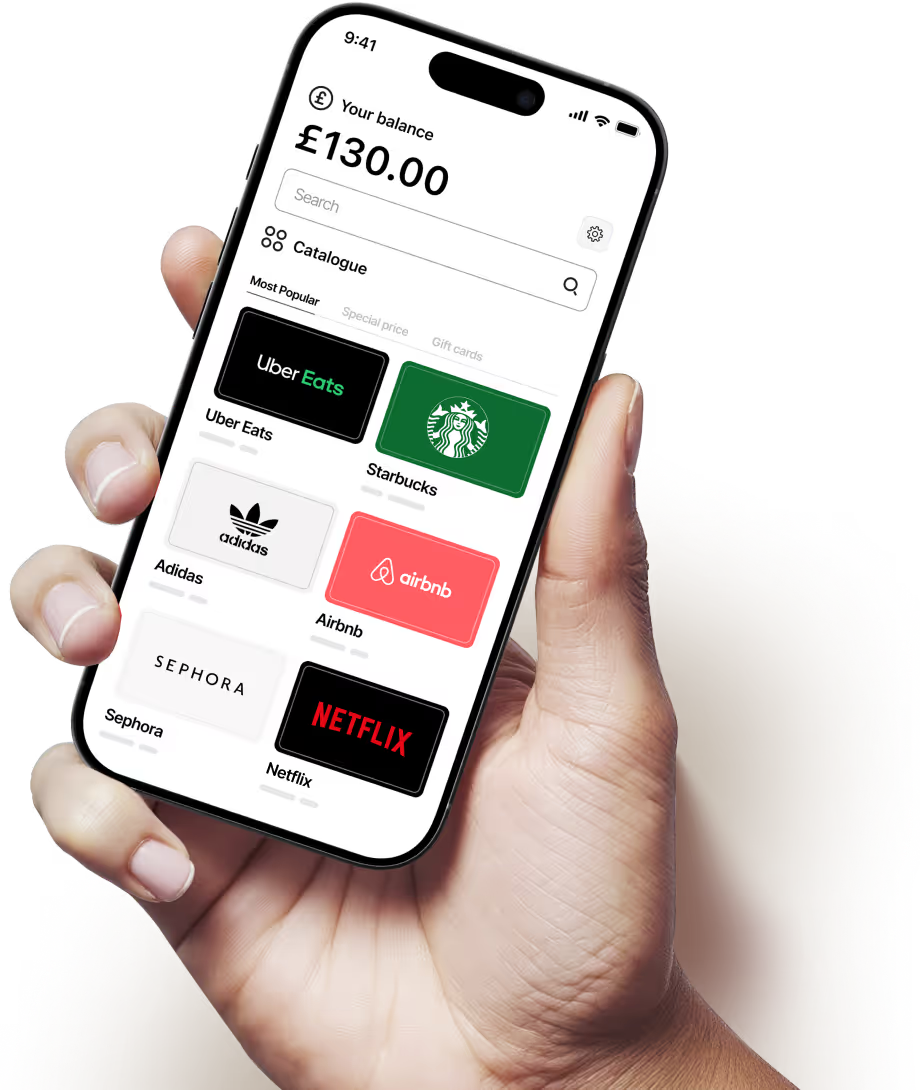
Totally provides the reward infrastructure that subscription businesses need to run lifecycle-mapped retention programmes at scale, from onboarding incentives to milestone rewards to win-back campaigns.
That means access to over 3,000 digital gift card brands across 50+ countries, prepaid Visa and Mastercard options, and multi-choice reward experiences where subscribers pick the format that works for them. Every touchpoint is fully brandable, so the reward feels like an extension of the subscription experience rather than a third-party add-on.
Totally's API integrates into existing subscription management and CRM platforms, enabling automated reward delivery triggered by lifecycle events: first delivery, third-month milestone, referral conversion, cancellation intent, or any custom trigger the retention team defines. Rewards are delivered instantly, which matters in a context where the connection between the subscriber's action and the incentive needs to feel immediate.
Real-time tracking gives retention teams visibility into which rewards are driving engagement, which lifecycle stages are responding best, and where the programme can be optimised. The data feeds back into the next campaign, creating the compounding improvement loop that separates high-performing programmes from static ones.
For subscription businesses where every month of retained revenue compounds, having the right reward infrastructure in place turns retention from a constant firefight into a structured, measurable growth lever.
If your subscription business is experiencing significant churn in the first 90 days (and the data suggests most are), a lifecycle-mapped reward programme is one of the most direct ways to address it.
Start by identifying where in the subscriber journey your churn is concentrated. Map your cancellation data by cohort and time period. If the third month is your biggest drop-off, that's where the first reward intervention should go.
Then design one test. A milestone reward at month three, a streak bonus for consecutive months, or a referral incentive with a gift card reward for both sides. Run it against a control group and measure the impact on retention rate and lifetime value over 90 days.
Want to see how Totally can power your subscription retention programme? Drop us a note!
.avif)