.png)

Let’s build something great
See how Totally’s API can support your reward and payout workflows. Talk to our team to explore your use case, or access our documentation when you’re ready to get started.
Book a Demo
A £100 cash bonus becomes groceries. A £100 gift card becomes headphones someone's been eyeing for months. The psychology behind why one creates a moment and the other disappears into the payslip.


Ask someone what they did with their last cash bonus and most will struggle to answer. It went into their bank account, merged with their salary, and covered bills, groceries, or rent. The money was useful, but the recognition behind it evaporated the moment it hit the payroll system.
Ask someone what they did with their last gift card and the answer is usually specific. They bought headphones they'd been eyeing for months. They took their partner out for a meal they wouldn't normally have justified. They treated themselves to something that felt like a genuine reward. And they remember which company gave it to them.
That difference in recall explains a lot about why the "cash is king" assumption in employee recognition is being challenged by behavioural research, programme data, and the lived experience of People teams running rewards at scale. 65% of employees prefer meaningful gestures over money. Recognised employees are seven times more likely to be fully engaged. And two-thirds of people who receive a gift card remember why they earned it, what they redeemed it for, and which company gave it to them. Cash generates none of that recall.
This piece looks at the psychology behind why gift cards create a different kind of impact than cash, the business case for People and HR teams making the shift, and how modern multi-choice formats have resolved the one genuine advantage cash used to have: flexibility.
The distinction between cash and gift cards as recognition tools is best explained by a concept called mental accounting, developed by Nobel laureate Richard Thaler. The theory describes how people mentally categorise money into different buckets based on where it came from and what it's intended for, rather than treating all money as interchangeable.
People typically maintain separate mental accounts for salary (bills, rent, groceries), savings (long-term goals), and windfall (treats, experiences, things they'd enjoy but wouldn't normally buy). Where a reward lands in this mental framework determines how it feels and whether it creates any lasting positive association.
A cash bonus delivered through payroll lands squarely in the salary bucket. It appears as a line item on the payslip, co-mingled with regular earnings, and gets spent on the same things regular earnings get spent on. The employee doesn't experience a reward. They experience a slightly larger paycheck. A month later, they can't distinguish the bonus from their regular pay. The recognition moment has effectively been absorbed and erased.
A gift card lands in the windfall bucket. Because it's separate from payroll, it's mentally categorised as "free money" for something enjoyable. The recipient feels permission to spend it on something they want rather than something they need. That psychological freedom is what makes the reward satisfying and memorable. The employee who uses a £100 gift card to buy those headphones they'd been considering for weeks associates the purchase, the enjoyment, and the memory with the company that gave them the reward.
Research on the endowment effect reinforces this further. Once someone possesses a gift card, they tend to value it approximately 22% higher than its cash equivalent. A £100 gift card feels worth more than £100 in cash, even though the monetary value is identical. That perception gap is entirely psychological, but its impact on how the reward is experienced and remembered is measurable.
Beyond the mental accounting framework, there's a practical issue with cash bonuses that compounds the psychological one.
When a cash bonus is processed through payroll, it's subject to visible, immediate tax deductions. A £100 bonus arrives as approximately £72 in net pay. The employee was told they'd receive £100 in recognition of their contribution, but what they see on their payslip is £72. The reward feels diminished before they've had a chance to appreciate it.
A £100 gift card, by contrast, arrives as £100. The company still handles the tax accounting on the back end (and in most cases, grosses up the amount to cover it), but the employee's experience of receiving the reward is preserved at full value. The moment of recognition isn't reduced by a visible tax line. This separation between the reward experience and the tax administration matters more than most programme managers realise, because it's the moment of receiving the reward that creates the emotional impact.
There's a second issue with payroll-delivered bonuses: they quickly shift from feeling like a reward to feeling like expected compensation. When an employee receives a cash bonus every quarter, it becomes part of their anticipated pay. If the company has a difficult quarter and reduces the bonus, the employee doesn't experience a smaller reward. They experience a pay cut. The recognition programme has become a compensation expectation, which is the opposite of what it was designed to do.
Gift cards, delivered as separate, tangible items outside the payroll cycle, are more consistently experienced as genuine gifts given in recognition of specific contributions. They maintain their character as recognition rather than gradually becoming part of the compensation baseline.
The psychological differences between cash and gift cards translate directly into the business metrics that People and HR teams are measured on.
Engagement. Employees who receive meaningful recognition are four times more likely to be engaged and five times more likely to feel connected to company culture. Gift cards create the memorable, positive experiences that drive this engagement. Cash bonuses, once absorbed into payroll, don't register as recognition in the same way. Business units with higher employee engagement are 23% more profitable than those with lower engagement, which means the format of your recognition rewards has a direct, if indirect, connection to commercial performance.
Retention. 66% of employees say they would leave their job if they didn't feel valued. Organisations with formal recognition programmes see 31% less voluntary turnover. The question for People teams is whether their recognition format is actually making employees feel valued, or just making their paycheck slightly larger. Gift cards, because they create distinct, memorable moments tied to specific achievements, are more effective at generating the feeling of being valued that retention depends on.
Recall and attribution. Two-thirds of gift card recipients remember why they earned the reward, what they redeemed it for, and which company gave it to them. That triple recall, the achievement, the experience, and the employer, is exactly what a recognition programme is designed to create. Cash generates almost none of this attribution. When someone can't remember what they did with their bonus, the programme has spent money without achieving its purpose.
Frequency and consistency. Cash bonuses tend to be large, infrequent, and tied to annual or quarterly cycles. Gift cards can be delivered at any value, at any frequency, for any occasion. This makes it practical to recognise contributions in real time rather than batching everything into a quarterly payout that arrives weeks after the achievement it's supposed to acknowledge. 75% of employees feel happiest when recognised at least once a month, and the most effective programmes recognise weekly. That cadence is far easier to sustain with digital gift cards than with cash bonuses.
The most common reason managers default to cash is the fear of choosing the wrong gift card. A Starbucks card for someone who doesn't drink coffee. A restaurant voucher for someone with dietary restrictions. A retail brand the employee has no interest in. The concern is legitimate, and for years it gave cash a genuine practical advantage.
Modern multi-choice formats have eliminated this problem entirely.
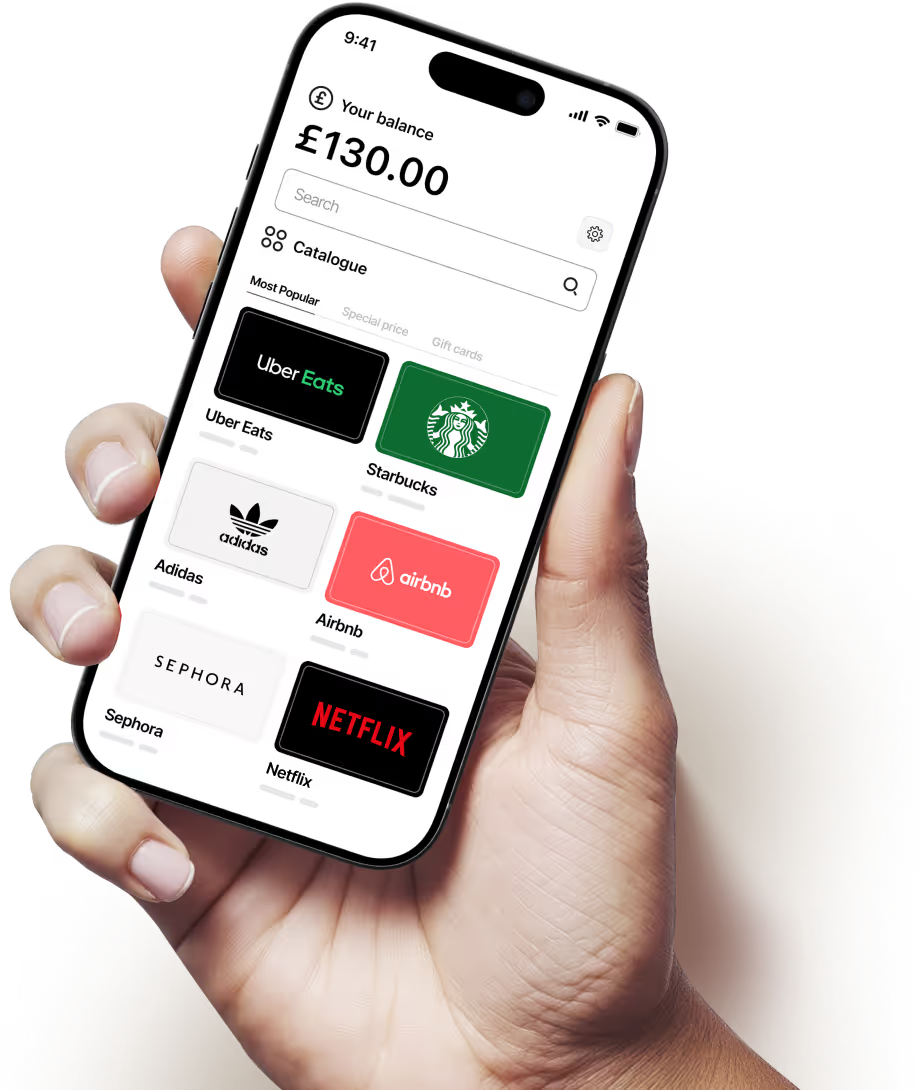
A multi-choice reward card gives the recipient access to a full catalogue of brands and lets them choose how to spend their reward. The company sends one card. The employee selects from hundreds of options: their favourite coffee shop, a food delivery service, a retail brand they love, or a prepaid Visa or Mastercard if they want complete flexibility. The coffee lover picks the café. The foodie picks the restaurant. The person who wants maximum flexibility picks the prepaid card. Everyone receives a reward that's relevant to them personally.
Curated collections take this further by tailoring the available options to the context of the recognition. A wellbeing-themed collection for a wellness milestone. A dining and experiences selection for a team celebration. A locally relevant set for employees in a specific country or region. The curation communicates that the company thought about what would be appropriate for the moment, while the choice within that curation ensures the employee ends up with something they genuinely want.
This combination of curation and choice resolves the tension that made cash feel safer. The company controls the quality, relevance, and branding of the reward experience. The employee controls the specific outcome. The recognition moment feels personal and considered, and the risk of getting it wrong has been removed from the equation.
Beyond the psychological and engagement benefits, gift cards are operationally simpler to manage than cash bonuses, particularly for teams running recognition across large or distributed workforces.
Cash bonuses require payroll processing, which means HR coordination, tax calculations, and integration with compensation systems for each reward event. For organisations with employees across multiple countries, this means navigating different payroll systems, tax treatments, and banking requirements in every jurisdiction. The administrative effort per reward is high, which naturally pushes programmes toward fewer, larger, less frequent payouts.
Digital gift cards can be delivered via email, triggered automatically through an API, and tracked from a single platform regardless of how many countries or employees are involved. The operational effort doesn't scale proportionally with the number of recipients, which makes it practical to run frequent, smaller recognition moments without creating an administrative burden for the People team.
Financial reconciliation is also simpler. Every gift card issuance is tracked within the reward platform: what was sent, to whom, when, at what value, and whether it was redeemed. That visibility gives both People teams and finance a clear picture of programme spend and impact without requiring separate tracking systems or manual reconciliation.
It's worth being balanced about this. Cash has a role in recognition, particularly at higher values and in specific contexts.
For substantial annual performance bonuses, profit sharing, or significant milestone awards where the amounts are large enough to feel meaningful as financial compensation, cash or high-value prepaid cards are often the right choice. A £5,000 year-end bonus has a different character to a £50 recognition reward, and the mental accounting dynamics shift at higher values.
Cash also works in contexts where the relationship is explicitly compensatory rather than celebratory. Referral bonuses, contest prizes with published cash values, and incentives where the financial amount is the primary motivator all function well as cash.
The case for gift cards is strongest in the space where most employee recognition actually happens: the regular, ongoing acknowledgement of contributions, milestones, and behaviours that keeps people engaged and feeling valued between the big moments. That's the recognition that happens weekly or monthly, at values between £10 and £150, for the specific achievements that make up the fabric of a strong workplace culture. In that space, gift cards outperform cash on every dimension that matters.
Totally provides the reward infrastructure for People and HR teams looking to move their recognition programme from cash to gift cards, or to enhance an existing gift card programme with more choice, better personalisation, and global reach.
That means access to over 3,000 digital gift card brands across 50+ countries, prepaid Visa and Mastercard options for employees who want complete flexibility, and multi-choice reward experiences where recipients select their own choice from the full catalogue. Through Totally's curated collections, organisations can build custom reward selections for different recognition occasions, from wellbeing milestones to team celebrations to work anniversaries, ensuring every reward moment feels considered rather than generic.
Totally's API integrates into existing HR and recognition platforms, enabling automated delivery triggered by milestones, manager actions, or custom events. Rewards are delivered instantly, preserving the connection between the achievement and the recognition moment. Real-time tracking gives People and finance teams visibility into programme activity, redemption patterns, and spend across all locations and teams.
For organisations where recognition directly shapes engagement, retention, and culture, Totally handles the delivery, the choice architecture, and the operational complexity so the People team can focus on making every recognition moment count.
If your organisation currently defaults to cash bonuses for recognition and you're considering whether gift cards would deliver better engagement outcomes, a few steps will help you test the hypothesis with your own data.
First, run a parallel test. For your next round of recognition, give half the group a cash bonus and half an equivalent-value gift card with multi-choice redemption. Survey both groups 30 days later on recall, satisfaction, and how the reward made them feel. The difference in responses will likely confirm what the research predicts.
Second, look at your recognition frequency. If your programme is limited to quarterly or annual cash bonuses, you're almost certainly under-recognising. Gift cards make it practical to recognise more frequently at lower values, which the data consistently shows drives stronger engagement than infrequent large payouts.
Third, assess whether your current programme creates the recall and attribution you're looking for. Can your employees name their last recognition reward and what they did with it? If the answer is no, the format is likely the issue. A reward that's forgotten hasn't fulfilled its purpose, regardless of how much it cost.
Recognition is one of the highest-leverage investments a People team can make. The format of the reward determines whether that investment creates a lasting, positive association with the company or disappears into the next payslip without leaving a trace.
Want to see how Totally can power your recognition programme with gift cards that create moments people remember? Drop us a note!
.avif)