.png)

Let’s build something great
See how Totally’s API can support your reward and payout workflows. Talk to our team to explore your use case, or access our documentation when you’re ready to get started.
Book a Demo
Remote work is performing well on productivity and engagement. Recognition hasn't kept up. Only a third of distributed employees feel fully valued, and most organisations haven't adapted their recognition infrastructure for a workforce they rarely see in person.


80% of companies now allow some level of remote or hybrid work. 84% of employees report feeling more productive in these arrangements. Fully remote workers show the highest engagement rate of any work arrangement at 31%, above hybrid and on-site employees. By most measures, distributed work is performing well.
The part that isn't performing well is recognition. Only 31% of remote or hybrid companies have formal recognition systems in place. Only a third of distributed employees feel fully valued. And a five-year global study by Vega Factor found that motivation in remote teams drops significantly over time, even among people who actively chose to work remotely. The decline isn't sudden. It's gradual, often invisible in quarterly engagement surveys, and typically surfaces as a retention problem months after the underlying motivation has eroded.
The connection between recognition and motivation in distributed teams is well documented. Among remote employees who receive regular recognition, 57% report higher motivation and commitment. Virtual recognition programmes increase engagement by 30%. Recognition correlates with 37% higher retention in hybrid work environments. The data is clear on what works. The problem is that most organisations haven't adapted their recognition infrastructure for a workforce they rarely see in person.
This piece looks at what disappears from recognition when teams go distributed, why the standard remote recognition approach falls short, and how to build a programme that creates genuine connection and motivation across locations, time zones, and countries.
In a co-located workplace, a significant amount of recognition happens informally and spontaneously. A manager notices someone staying late to finish a project and thanks them the next morning. A team celebrates a milestone together over lunch. A colleague's effort is visible to the people around them, and acknowledgement flows naturally from that visibility.
Visibility of effort. In an office, managers can see who's working hard, who's helping colleagues, who's going beyond what's expected. Remotely, work output is visible but work effort often isn't. A team member who spends an hour mentoring a junior colleague, who stays online to support someone in a different time zone, or who consistently brings energy to virtual meetings is contributing in ways that don't show up in project management tools. Without deliberate mechanisms to surface these contributions, they go unrecognised.
Spontaneous acknowledgement. The quick "thanks, that was really helpful" in a corridor or after a meeting has no remote equivalent that carries the same weight. A Slack message serves the same function on paper but lacks the personal, in-the-moment quality that makes informal recognition feel genuine. 31% of employees say lack of time is the main reason recognition gets missed. When recognition requires opening a platform, composing a message, and selecting a reward rather than simply saying something to someone standing next to you, the friction multiplies.
Shared celebration. Team lunches, office celebrations, and collective moments of acknowledgement build cohesion and make individual contributions feel like part of a larger effort. In a distributed team, these moments need to be deliberately created rather than happening organically, and most organisations haven't built the infrastructure to do that consistently.
Equal access to recognition. 43% of remote mothers feel overlooked for promotions and growth opportunities. When recognition is informal and proximity-dependent, the people who are most visible to leadership (those in the office, those in the same time zone, those who speak up most in meetings) receive more acknowledgement than those who contribute equally but less visibly. A formal recognition programme creates equity that informal gestures can't guarantee.
Most companies that have attempted to address recognition in distributed teams have defaulted to one or more of these approaches: a shoutout channel in Slack or Teams, a monthly all-hands mention, or an occasional gift card sent by a manager who remembers to do it. These gestures are well-intentioned but they share a few common weaknesses.
Inconsistency. When recognition depends on individual managers remembering to do it, the experience varies enormously across teams. Some managers are natural recognisers who adapt well to distributed environments. Others, often through no fault of their own, let recognition slip when they're managing competing demands remotely. The result is the same inconsistency we explored in our employee recognition automation piece: a team's experience of being valued depends on who their manager happens to be rather than on any organisational standard.
Lack of tangible value. A message in a public channel is appreciated but it doesn't create the kind of memorable, emotionally resonant moment that drives long-term motivation. A cash bonus processed through payroll disappears into the recipient's bank account without distinction from their regular salary. As we covered in our piece on gift cards versus cash, the format of a reward determines which mental bucket it lands in. Cash lands in the "salary" bucket and gets spent on bills. A gift card lands in the "windfall" bucket and gets spent on something the recipient actually enjoys and remembers. For remote employees who already feel less connected to the organisation, the format matters more, not less.
Time zone and location blindness. An all-hands shoutout at 3pm GMT reaches the London team during working hours but catches the Singapore team at 11pm and the San Francisco team at 7am. The recognition moment that was supposed to make someone feel valued instead makes them feel like an afterthought. Digital recognition that's delivered individually, at a relevant time, in a locally appropriate format, solves this without requiring the team to coordinate across time zones.
No mechanism for peer-to-peer recognition. In an office, colleagues recognise each other naturally through conversation, collaboration, and shared experience. Remotely, peer recognition requires a deliberate mechanism. Teams where peer-to-peer recognition is embedded into the workflow report stronger social connections and higher engagement, both of which are particularly valuable in distributed environments where isolation is a documented concern.
The distributed teams reporting the strongest engagement and motivation have typically made a few specific adaptations to how recognition operates.
Automated milestone tracking that ensures nobody is missed. Anniversaries, birthdays, project completions, and tenure milestones should be tracked automatically and surfaced to the relevant manager with enough lead time to respond personally. In a co-located team, these moments are often visible and remembered socially. In a distributed team, they're invisible unless the system catches them. The automation handles the tracking. The manager handles the personal message and gesture. This is the same "automate the logistics, keep the human touch" principle from our recognition automation piece, applied specifically to the distributed context.
Instant digital delivery that reaches every team member equally. A digital gift card delivered via email arrives at the same speed and with the same impact whether the recipient is in London, Lagos, or Los Angeles. There's no postal delay, no logistics to manage across countries, and no risk of the recognition moment being diminished by the time it arrives. 60% of the B2B gift card market is now digital, up from 20% just six years ago. The infrastructure exists to deliver recognition instantly anywhere.
Locally relevant rewards that show genuine thought. A gift card to a brand someone uses and loves in their country communicates more care than a generic global voucher. For a distributed team spanning the UK, Germany, the UAE, and Japan, the reward catalogue needs to adapt by location. The employee in Berlin should see brands relevant to their market. The employee in Dubai should see brands relevant to theirs. This local relevance signals that the organisation sees the individual, not just the headcount in a different geography.
Multi-choice rewards that give recipients agency. Different people value different things. Some prefer a dining experience. Others want a retail brand they've been eyeing. Others want the flexibility of a prepaid card they can spend anywhere. Offering a curated selection rather than a predetermined reward increases satisfaction and redemption. The recipient feels that the reward was designed for them to choose, not chosen for them generically.
Peer-to-peer recognition built into the workflow. Enabling colleagues to recognise each other, with a small reward attached, recreates the social visibility of in-person acknowledgement. When a teammate sends a recognition with a £5 or £10 gift card for helping with a deadline or sharing knowledge, it builds the kind of informal appreciation network that distributed teams otherwise lose.
Manager prompts for contributions that would have been visible in-office. AI and data-driven tools can surface patterns that managers might miss remotely: someone who's consistently first to respond to team requests, someone who's been active in cross-team collaboration, someone who's completed a stretch of consistent high-quality work. The system flags the moment. The manager decides whether and how to recognise it. This addresses the visibility gap that remote work creates without replacing the manager's judgment.
For organisations with distributed teams across multiple countries, recognition involves practical complexities that go beyond choosing the right gift card brand.
Tax treatment varies by jurisdiction. Some countries offer tax exemptions for small benefit gifts below a certain threshold. Others treat all rewards as taxable income. The recognition programme needs to account for these differences automatically rather than requiring the HR team to research the tax implications in each country for every reward sent.
Currency and value calibration. A £25 reward carries different weight depending on the local economy. What constitutes a meaningful recognition gesture in London is different to what's meaningful in Warsaw, São Paulo, or Manila. The reward value may need to adjust by location to deliver equivalent impact.
Cultural norms around recognition. Public recognition is valued in some cultures and uncomfortable in others. Gift-giving expectations and norms vary. The programme should be flexible enough to accommodate these differences while maintaining a consistent standard of recognition across the organisation.
Data protection and privacy. Collecting and processing employee data across jurisdictions involves GDPR in Europe, different regulations in Asia and the Middle East, and varying requirements in the Americas. The platform handling recognition and reward delivery needs to manage compliance at the transactional level across all markets the organisation operates in.
Managing these complexities manually, country by country, is operationally prohibitive for most HR teams. A single platform that handles brand availability, currency, tax treatment, and compliance across all territories makes multi-country recognition programmes viable rather than aspirational.
The stakes around distributed team recognition are higher than many organisations realise.
35% of employees aged 25 to 44 and 40% of women would leave their current role without adequate remote working flexibility. Companies can't pull people back to the office to solve the recognition problem without risking the talent they're trying to retain. The solution has to work within the distributed model, not around it.
Bain & Company tracked 520 companies that implemented targeted micro-engagement interventions, including regular manager check-ins, peer recognition programmes, and skills-based recognition, over 18 months. The result was an 18.3% median reduction in voluntary turnover, saving the average mid-size company approximately $4.7 million annually on a programme investment of just $340 per employee.
Teams with strong recognition show 21% greater profitability. 74% of employees with regular recognition report stronger organisational commitment. And the engagement data is unambiguous: recognition is one of the few interventions that consistently moves retention and motivation metrics in distributed teams where other levers (office perks, in-person culture, spontaneous social interaction) are no longer available.
For People leaders managing distributed workforces, recognition isn't a nice-to-have programme that sits alongside the core HR function. It's one of the primary tools for maintaining the connection, motivation, and belonging that keep distributed employees engaged and retained.
Totally provides the reward delivery infrastructure that HR & People teams need to run recognition programmes across locations, countries, and time zones without managing separate procurement and delivery in each market.
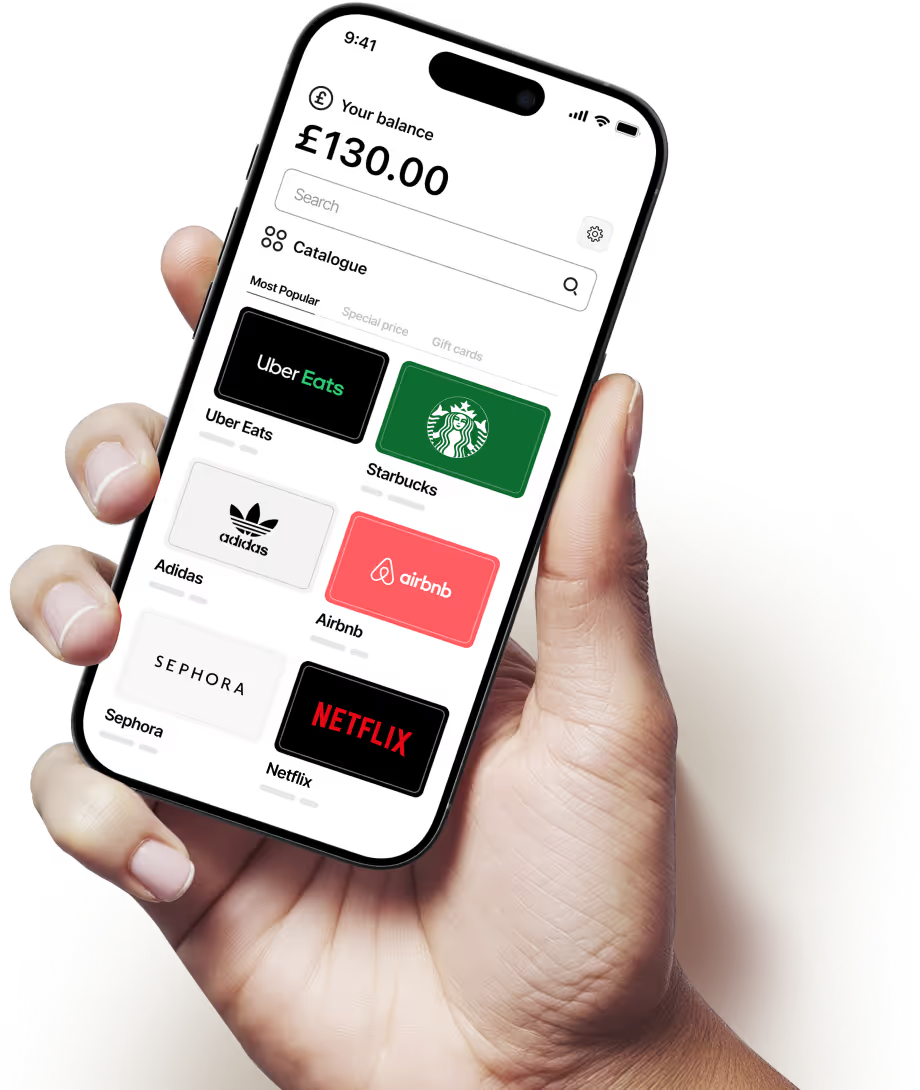
That means access to over 3,000 digital gift card brands across 50+ countries, prepaid Visa and Mastercard options, and multi-choice reward experiences where employees select from a curated catalogue. Through Totally Curated, organisations can build custom reward collections for different recognition occasions, from work anniversaries to peer-to-peer appreciation to milestone celebrations, with local brand relevance applied automatically by geography.
Rewards are delivered instantly via email, reaching every employee at the same speed regardless of location. Every touchpoint is fully brandable, so the recognition moment feels like it comes from the organisation rather than a third-party platform. Real-time tracking gives People teams visibility into programme activity, redemption patterns, and recognition coverage across all teams and locations.
For organisations where the workforce is distributed but the recognition standard shouldn't be, Totally handles the reward infrastructure so the People team can focus on building the culture that makes distributed employees feel genuinely valued.
If your organisation has moved to distributed or hybrid work but your recognition programme was designed for a co-located workforce, three specific adaptations will address the biggest gaps.
First, assess your recognition coverage by team and location. Map how frequently recognition happens across different managers, departments, and geographies. If some teams receive regular acknowledgement while others go months without it, the gap is likely driven by manager behaviour and lack of infrastructure rather than lack of intent. Automated milestone tracking and manager prompts address this directly.
Second, evaluate what your current recognition experience feels like for someone working remotely in a different country. If the reward is a generic voucher that isn't relevant to their market, or the recognition arrives as an afterthought in a time zone they weren't considered for, the programme is creating distance rather than connection. Locally relevant, digitally delivered rewards with personal messaging close that gap.
Third, look at whether recognition data is connected to your engagement and retention metrics. If recognition activity lives in a separate system with no line of sight to how it correlates with team engagement scores and turnover rates, you're running the programme without the feedback loop that would help you improve it. Connecting these data sets is what turns recognition from a well-intentioned gesture into a measurable retention tool.
The organisations building the strongest distributed cultures in 2026 aren't doing it through office mandates or all-hands video calls. They're building the infrastructure that makes every employee, regardless of where they sit, feel seen, valued, and connected to the team around them.
Want to see how Totally can power recognition across your distributed workforce? Drop us a note!