.png)

Let’s build something great
See how Totally’s API can support your reward and payout workflows. Talk to our team to explore your use case, or access our documentation when you’re ready to get started.
Book a Demo
Most channel incentive programmes reward the top 10-20% of partners who would perform well anyway. The real growth opportunity sits in the long tail of mid-tier partners that cash bonuses and volume targets consistently fail to activate.


Most channel incentive programmes are designed around a familiar structure: hit a volume target, earn a cash bonus. The partners who are already performing well reach the threshold comfortably. The much larger group of mid-tier and lower-performing partners look at the same target, decide it's unreachable, and mentally opt out before the quarter is halfway through.
The result is a programme that rewards behaviour that would have happened anyway while doing very little to change the behaviour of the partners who represent the biggest growth opportunity. 81% of top-performing companies run non-cash incentive programmes, and those programmes deliver a 32% increase in total revenue and a 30% increase in market share. But the benefit isn't coming from motivating partners who were already motivated. It's coming from reaching the 60 to 70% of the partner base that traditional cash-and-volume programmes consistently fail to activate.
This piece looks at how digital rewards (gift cards, prepaid cards, multi-choice experiences) can reach that broader partner base more effectively than cash, why the shift from volume-based to behaviour-based incentives is accelerating, and how to design a programme that drives performance across the full partner ecosystem rather than concentrating returns among a few top performers.
In most channel programmes, a small percentage of partners generate a disproportionate share of revenue. The top 10 to 20% are well-resourced, deeply engaged, and already prioritising your product. They'd perform well with or without an incentive programme, though the programme certainly helps retain their focus and loyalty.
The remaining 80 to 90% of partners sit across a spectrum. Some are moderately active but inconsistent. Some have the potential to sell more but haven't been given a compelling reason to prioritise your product over a competitor's. Some are relatively new to the programme and haven't yet built the knowledge or confidence to sell effectively. And some have quietly disengaged because the incentive structure never felt achievable or relevant to them.
This long tail is where the real growth opportunity lives. Moving a partner from 5 deals a quarter to 10 is often more achievable and more valuable in aggregate than pushing a top performer from 50 to 55. But traditional incentive structures, built around absolute volume thresholds and cash bonuses, aren't designed to motivate partners at this level. The targets feel distant, the rewards feel generic, and the programme feels like it was built for someone else.
The companies rethinking their channel incentive approach in 2026 are shifting focus from rewarding outcomes at the top to incentivising behaviours across the middle. And the reward format they're using to do it is increasingly non-cash.
The instinct in most channel programmes is to default to cash. It's simple, universally understood, and every partner wants more of it. But the research consistently shows that non-cash incentives, particularly digital gift cards and prepaid cards, outperform cash across several dimensions that matter for sustained partner engagement.
Cost efficiency. Cash rewards cost approximately $0.12 per incremental performance dollar generated. Non-cash rewards cost approximately $0.04 per incremental dollar, making non-cash programmes roughly three times more cost-efficient. At the scale most channel programmes operate, that difference is commercially significant.
Memorability and attribution. A cash bonus gets deposited into a bank account and absorbed into general income. Within a week, the partner can't distinguish it from their regular revenue. A £50 gift card to a brand they chose themselves creates a distinct, memorable experience that the partner associates specifically with your programme. The IRF found that participants are more likely to recall receiving a gift card than a cash payment of the same value, and that recall correlates with higher programme satisfaction and continued engagement.
Perceived value exceeds face value. Research published in the Journal of Management Information Systems found that people frequently prefer non-cash incentives over cash, even when the cash amount is equal or higher, because the ability to choose a reward is itself a motivator. A multi-choice gift card where the partner selects from curated brands carries higher perceived value than the equivalent in cash, because the selection process creates a sense of ownership and personal relevance.
Gift cards are the preferred format. 63% of businesses with channel incentive programmes already use gift cards as an incentive, making them the most common non-cash format. Partners are familiar with them, they're easy to deliver digitally, and they don't carry the administrative complexity of merchandise fulfilment or travel rewards.
The "trophy value" effect. When a partner uses a gift card to buy something they wouldn't normally have purchased, it creates what incentive researchers call "trophy value." That item, whether it's a dinner out, a piece of electronics, or an experience, becomes a tangible reminder of the achievement. Cash doesn't create this effect because it gets spent on bills and routine expenses without any emotional association to the programme that generated it.
None of this means cash has no role in channel incentives. For large, high-value bonuses tied to major contract wins, cash or substantial prepaid cards remain appropriate. But for the frequent, smaller incentives that drive day-to-day partner behaviour across the broader base, non-cash rewards consistently deliver better engagement at lower cost.
The channel incentive landscape is moving from volume-based rewards to value-based rewards, and this shift has significant implications for how programmes are structured.
Traditional programmes reward a single metric: units sold or revenue generated. Hit the number, get the bonus. This works for driving top-line volume from partners who are already active, but it doesn't influence the upstream behaviours that determine whether a partner can sell effectively in the first place.
The companies building more effective channel programmes in 2026 are incentivising a broader set of behaviours that contribute to long-term performance.
Deal registration. Rewarding partners for registering deals early in the pipeline gives vendors visibility into what's coming and creates a commitment from the partner to see the deal through. A £15 to £25 gift card for a registered deal that meets qualification criteria is a small cost relative to the pipeline visibility and partner commitment it generates.
Training and certification. Partners who complete product training sell more effectively and close at higher rates. Attaching a digital reward to certification completion creates a tangible incentive to invest the time, particularly for mid-tier partners who might otherwise deprioritise training in favour of selling products they already know.
Marketing engagement. Co-marketing activities, event attendance, content sharing, and campaign participation all contribute to pipeline generation. Rewarding these activities with instant digital incentives keeps partners engaged with your brand between sales cycles and ensures your product stays top of mind.
Customer outcomes. The most progressive programmes are starting to reward partners based on the customer outcomes they deliver: implementation success, customer satisfaction scores, renewal rates, and expansion revenue. This aligns the partner's incentive with long-term value creation rather than just closing the initial deal.
SPIFFs for short-term activation. Sales Performance Incentive Fund programmes that reward specific behaviours during product launches, competitive pushes, or slow seasons are one of the highest-impact use cases for digital gift cards in channel programmes. A £25 to £50 instant reward for the first five demos booked this month, or for every competitive displacement closed this quarter, creates urgency and focus around specific commercial priorities. The instant delivery of a digital reward closes the gap between the behaviour and the incentive, which is what makes SPIFFs effective.
The common thread across all of these is that the rewards are smaller, more frequent, and tied to specific actions rather than aggregate outcomes. Digital gift cards are particularly well-suited to this model because they can be delivered instantly at any denomination, don't require payment processing or banking details, and scale operationally without proportional increases in administration.
Running a channel incentive programme with cash-based rewards at scale, particularly across borders, creates operational complexity that grows with every partner and every market added.
Processing cash incentives requires collecting banking details from every partner, managing payment runs across different currencies and banking systems, handling tax documentation and reporting in each jurisdiction, and reconciling payments against programme rules. For a programme running across 500 partners in 10 countries, this becomes a substantial administrative burden that often requires dedicated resource.
Digital gift cards simplify this significantly. Rewards are delivered via email, so no banking information is needed. Delivery is instant and automated through API integration with the programme platform. Tracking and reconciliation happen within the reward platform. And compliance, including tax reporting and regulatory requirements, can be handled at the transactional level across jurisdictions rather than managed manually market by market.
For programme managers, the operational difference between "process 200 bank transfers across 8 countries" and "trigger 200 instant gift card deliveries from a single platform" is the difference between a week of administrative work and a few clicks.
The operational efficiency also makes it practical to run more frequent, smaller incentives. When each reward delivery costs meaningful time and effort, programmes naturally gravitate toward fewer, larger payouts. When delivery is automated and instant, you can incentivise deal registrations, training completions, and marketing activities individually without the operational cost becoming prohibitive.
The most effective channel incentive programmes are designed with the full partner base in mind, not just the top tier. A few design principles help ensure the programme creates value across the spectrum.
Set attainable entry-level targets. If the first reward threshold requires a level of performance that only 15% of partners can reach, 85% of your ecosystem is excluded from the start. The entry point should be achievable for mid-tier partners, with escalating targets and rewards that stretch top performers.
Reward progress, not just outcomes. A partner who goes from one deal a quarter to three has shown meaningful improvement even if they're nowhere near the top of the leaderboard. Recognising and rewarding that progress keeps mid-tier partners engaged and moving in the right direction, rather than saving all recognition for the partners who were already at the top.
Offer choice in reward format. Different partners value different things. Some prefer a specific retail brand. Others want the flexibility of a prepaid card they can spend anywhere. Multi-choice reward experiences where partners select their preferred format drive higher satisfaction and redemption across the board.
Localise for each market. For programmes running across multiple countries, the reward needs to feel locally relevant. Brand preferences, appropriate values, and even the cultural significance of receiving a gift vary by market. A gift card brand that resonates with partners in the UK may not exist or carry the same meaning in Germany, Japan, or the UAE.
Make the programme visible and easy to understand. Partners engage with incentive programmes they can see and comprehend quickly. A dashboard showing progress toward the next reward, clear rules about what behaviours are incentivised, and transparent communication about how rewards are earned and delivered all increase participation. Complexity and ambiguity are the enemies of engagement in channel programmes.
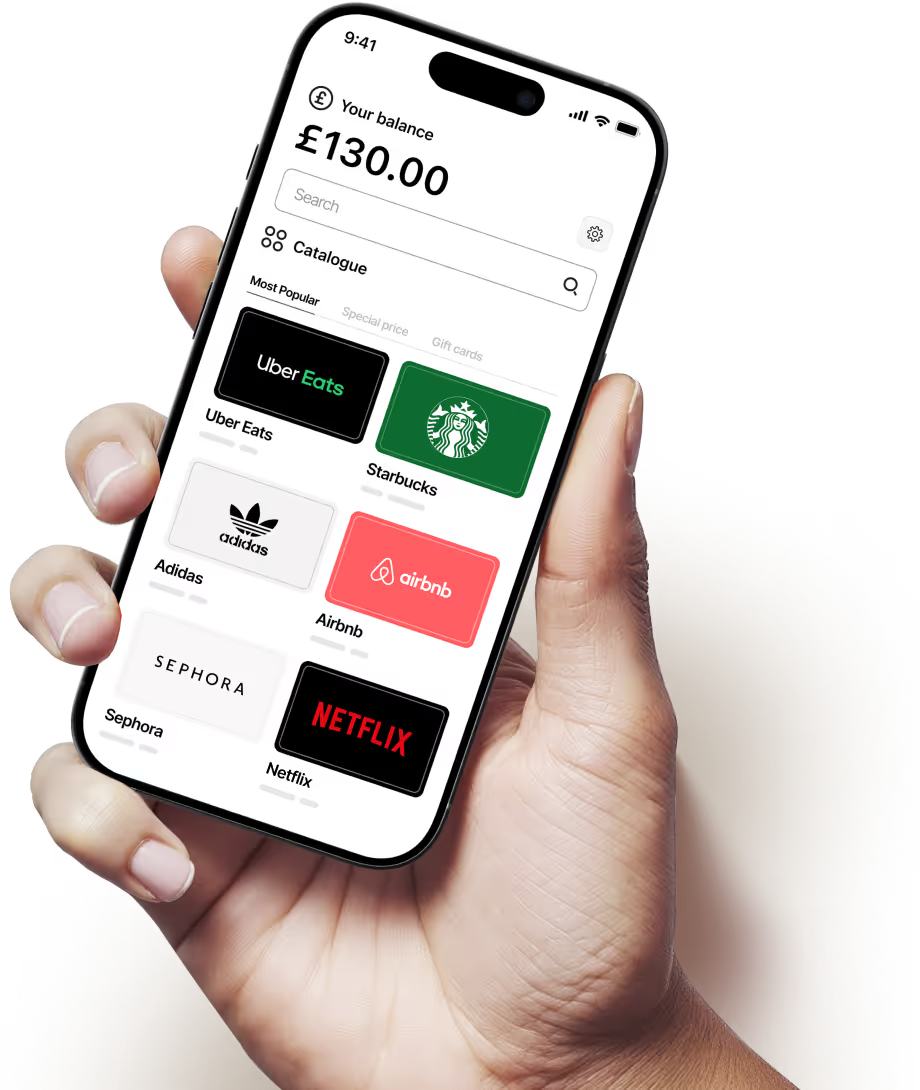
Totally provides the reward infrastructure that makes digital incentive programmes practical to run across a distributed partner network, from SPIFFs and deal registration rewards to tiered programmes and certification incentives.
That means API-driven access to over 3,000 digital gift card brands across 50+ countries, prepaid Visa and Mastercard options, and multi-choice reward experiences where partners select the format they prefer. Rewards are triggered automatically through API integration with CRM, PRM, or programme management platforms, so each qualifying behaviour generates an instant reward without manual processing.
Every reward touchpoint is fully brandable, reinforcing the vendor's identity at the moment that matters most. Real-time tracking gives programme managers visibility into reward activity, partner engagement, and programme costs across all markets, providing the data needed to optimise the programme over time.
For businesses running partner incentive programmes across multiple countries and hundreds or thousands of partners, Totally removes the procurement, delivery, and compliance complexity and lets the commercial team focus on programme strategy and partner relationships.
If your channel incentive programme currently relies on cash bonuses tied to volume targets, and you're finding that it mainly motivates the partners who were already performing well, a few adjustments can extend the programme's impact across a much broader base.
First, look at your partner engagement distribution. What percentage of your partner base is actively participating in the incentive programme? If it's concentrated in the top 15 to 20%, the programme design is likely excluding the majority of your ecosystem. Adjusting entry-level thresholds and adding behaviour-based incentives alongside volume targets can bring mid-tier partners into the programme.
Second, pilot a non-cash reward alongside your existing cash incentives. Run a SPIFF with digital gift cards for a specific behaviour (demo bookings, deal registrations, training completions) and compare engagement and performance against equivalent cash incentives. The data from that single pilot will inform whether a broader shift makes commercial sense.
Third, measure the full cost of your current programme, including the operational overhead of processing cash payments, managing compliance, and administering the programme. When you factor in administration alongside the reward cost itself, the efficiency advantage of digital rewards often becomes the strongest part of the business case.
The channel programmes seeing the best returns in 2026 are spending more effectively. They’re reaching a broader partner base, incentivising a wider set of value-creating behaviours, and using a reward format that's more memorable, more efficient, and more operationally practical than cash.
Want to see how Totally can power your channel partner incentive programme? Drop us a note!
.avif)