.png)

Let’s build something great
See how Totally’s API can support your reward and payout workflows. Talk to our team to explore your use case, or access our documentation when you’re ready to get started.
Book a Demo
53% of employees say human-led recognition feels more genuine than anything automated. The opportunity is to use technology for the logistics while protecting the personal moments that make recognition actually work.


Recognition works when it feels personal. When a manager takes the time to acknowledge something specific, at the right moment, in a way that shows they actually noticed, the impact goes beyond the gesture itself. It builds trust, reinforces the behaviours the organisation values, and creates the kind of connection that makes people want to stay.
The problem is that running a recognition programme consistently across an entire organisation is operationally demanding. Managers have competing priorities. Milestones get missed. Some teams receive regular acknowledgement while others go months without it. And the administrative burden of tracking, managing, and delivering rewards at scale often falls on People and HR teams who are already stretched.
This is where automation comes in. But automation in recognition has a credibility problem, because 53% of employees still say that human-led appreciation feels more genuine than anything generated by technology. A recognition moment that feels automated loses the very quality that makes it effective. Send someone a generic "Happy 3rd anniversary!" email with a predetermined reward and no personal context, and the gesture can feel worse than no gesture at all.
The opportunity is to use technology for the parts of recognition that don't require a human touch (the tracking, the logistics, the delivery, the data) while protecting and enhancing the parts that do (the personal message, the thoughtful reward, the timing that shows someone actually paid attention). The organisations getting this right aren't choosing between automation and authenticity. They're using one to enable the other.
Recognition quality in most organisations is heavily manager-dependent. Some managers are naturally attentive, regularly acknowledge their teams, and take the time to make recognition feel personal. Others, often through no fault of their own, are consumed by operational demands and let recognition fall to the bottom of the priority list.
The result is that an employee's experience of recognition varies enormously depending on who their manager is and which team they sit in. Managers account for 70% of team engagement variance, and employees recognised weekly are 2.7 times more likely to be highly engaged than those who aren't. When recognition is inconsistent across an organisation, engagement becomes inconsistent too. And that inconsistency shows up in retention data: 66% of employees say they would leave their job if they didn't feel appreciated, and employees who don't feel recognised are twice as likely to quit within a year.
Automation addresses this by creating a minimum standard of recognition coverage that operates regardless of individual manager behaviour. Milestone tracking ensures no anniversary, birthday, or achievement goes unacknowledged. Prompts and nudges surface moments that might otherwise be missed. And automated delivery means that once a manager decides to recognise someone, the logistics happen instantly rather than getting stuck in a procurement queue.
The critical distinction is that automation should ensure recognition happens consistently. It shouldn't determine what the recognition says or how it feels. The message, the personal context, the "why this matters" component should always come from a person. Technology handles the when and the how. People handle the what and the why.
Drawing a clear line between what technology should handle and what humans should own is the most important design decision in any recognition programme.
Automate: tracking and surfacing. Milestone dates, work anniversaries, project completions, performance achievements, and tenure markers should all be tracked automatically and surfaced to managers as prompts. AI-driven systems can go further, identifying moments that traditional milestone tracking would miss: someone who's taken on extra responsibilities during a team transition, a contributor who's consistently delivering ahead of deadlines, or a team member who's been supporting colleagues across departments. Your research noted that most recognition is reactive, responding to events after they've happened. Proactive surfacing turns recognition into something that catches moments in real time rather than relying on memory alone.
Automate: logistics and delivery. Reward procurement, inventory management, gift card delivery, financial reconciliation, and compliance tracking across jurisdictions are all operational tasks that consume HR team time without adding any human value to the recognition moment. Automating these frees the team to focus on programme design, manager coaching, and the strategic work that actually improves recognition quality.
Automate: data and reporting. Recognition frequency by team and manager, reward redemption rates, programme participation, and the correlation between recognition and retention metrics should all be tracked automatically. This data tells you where recognition is working, where gaps exist, and which managers might benefit from coaching or support. Without it, you're running the programme blind.
Protect: the personal message. The words that accompany a recognition moment are what give it meaning. "Thanks for going above and beyond on the Henderson project last week, your attention to the client's feedback made a real difference to the outcome" lands completely differently to "Great work this quarter." AI can suggest prompts or starting points, but the final message should come from someone who knows the recipient and can reference something specific and genuine.
Protect: the reward selection. A curated, thoughtful reward reinforces the personal nature of the recognition. When someone receives a reward that reflects their interests, their location, or their preferences, it communicates an additional layer of care beyond the message itself. This is where having the ability to curate custom reward options for different teams, occasions, or individuals becomes valuable. A wellbeing-focused selection for a wellness milestone, a dining experience for a team celebration, or a curated local selection for someone in a specific office or region all show more thought than a default voucher from a single retailer.
Protect: the timing and context. When recognition arrives matters as much as what it says. Acknowledging someone's contribution the day it happened feels different to acknowledging it three weeks later in a batch email. Automation can ensure the prompt reaches the manager quickly. The manager decides when and how to deliver it in a way that feels natural and timely.
Traditional recognition programmes are almost entirely reactive. Someone completes a project, reaches an anniversary, or hits a sales target, and then the system enables a message or award. The event happens first. The recognition follows.
The limitation of this approach is that many of the moments most worth recognising are small, ongoing, and easy to overlook. Someone who consistently mentors junior colleagues. A team member who quietly absorbs extra work during a period of change. An employee who brings energy and positivity to every meeting without it being part of their job description. These contributions rarely trigger a milestone alert, but they're often the behaviours that define a strong team culture.
AI-driven recognition systems are starting to address this gap. By analysing patterns across project management tools, communication platforms, and performance data, they can surface insights that prompt managers to recognise contributions they might not have noticed on their own. The manager still decides whether and how to act on the prompt, but the system ensures the moment doesn't pass unnoticed.
This matters because only 19% of employees say they're recognised weekly, despite research showing that weekly recognition makes employees nine times more likely to feel a strong sense of belonging and more than twice as likely to be performing at their best. The gap between how often recognition should happen and how often it actually happens is where proactive systems create the most value. They don't replace the manager's judgment. They make it easier for managers to act on what they already know but might not get around to saying.
The reward attached to a recognition moment is often treated as an afterthought. A standard denomination gift card from a single retailer, selected because it's the easiest option to administer, delivered alongside a message that does most of the heavy lifting. That approach works in the sense that the employee receives something of value, but it misses the opportunity to extend the thoughtfulness of the recognition into the reward itself.
When the reward feels curated and considered, it amplifies the message. A few approaches make this practical at scale.
Curated selections by occasion. Rather than offering the same reward catalogue for every recognition moment, tailor the available options to the context. A work anniversary might warrant a selection weighted toward experiences or treats. A wellness milestone might surface fitness, relaxation, or self-care brands. A project completion might lean toward dining or entertainment. The curation communicates that the organisation thought about what would be appropriate, not just what was available.
Multi-choice rewards that give the recipient agency. Letting the recipient choose from a curated selection combines the thoughtfulness of curation with the practicality of personal preference. The organisation controls the quality and relevance of the options. The recipient chooses what they actually want. 65% of employees prefer non-monetary rewards like public praise or a kind note, but for the moments where a tangible reward is appropriate, choice drives higher satisfaction and redemption.
Localisation for distributed teams. For organisations with employees across multiple countries or regions, a reward that's relevant in London may not resonate in Singapore, Dubai, or São Paulo. Local brand availability, cultural norms around gift-giving, and appropriate values all need to be considered. Having a broad reward catalogue that adapts to each recipient's location ensures the experience feels locally relevant regardless of where the employee is based.
Branded presentation. The way a reward is delivered and presented matters. An email that carries the company's branding, references the specific recognition, and presents the reward as part of a cohesive experience feels intentionally different to a generic notification from a third-party platform. The delivery moment is the last impression, and it should reinforce the same thoughtfulness as the rest of the recognition.
Recognition programmes that don't measure their impact tend to either lose budget over time or stagnate without improving. A few metrics help demonstrate value and identify opportunities for improvement.
Recognition frequency and coverage. How often is recognition happening across the organisation, and is it distributed evenly? If one department receives three times the recognition of another, that's a signal worth investigating. Managers account for 70% of engagement variance, and recognition frequency is one of the most visible indicators of where that variance sits.
Engagement and retention correlation. Track recognition activity alongside engagement survey results and retention data by team. Organisations with formal recognition programmes see 25% higher retention, and quality recognition makes employees 45% less likely to leave. Connecting your programme data to these outcomes proves the commercial value.
Redemption rates and reward preferences. Which rewards are being redeemed and which are being ignored? This data tells you whether your reward selection is resonating with employees and where adjustments would improve the experience. Low redemption on a particular reward type is a signal to change the offering, not a sign that employees don't value recognition.
Manager participation. Are all managers using the programme, or is it concentrated among a few who were already strong recognisers? If participation is uneven, the programme design may need adjustment, whether that's better prompts, simpler workflows, or coaching for managers who find recognition difficult.
Totally provides the reward infrastructure that makes personalised, curated recognition practical to deliver at scale, across teams, locations, and occasions.
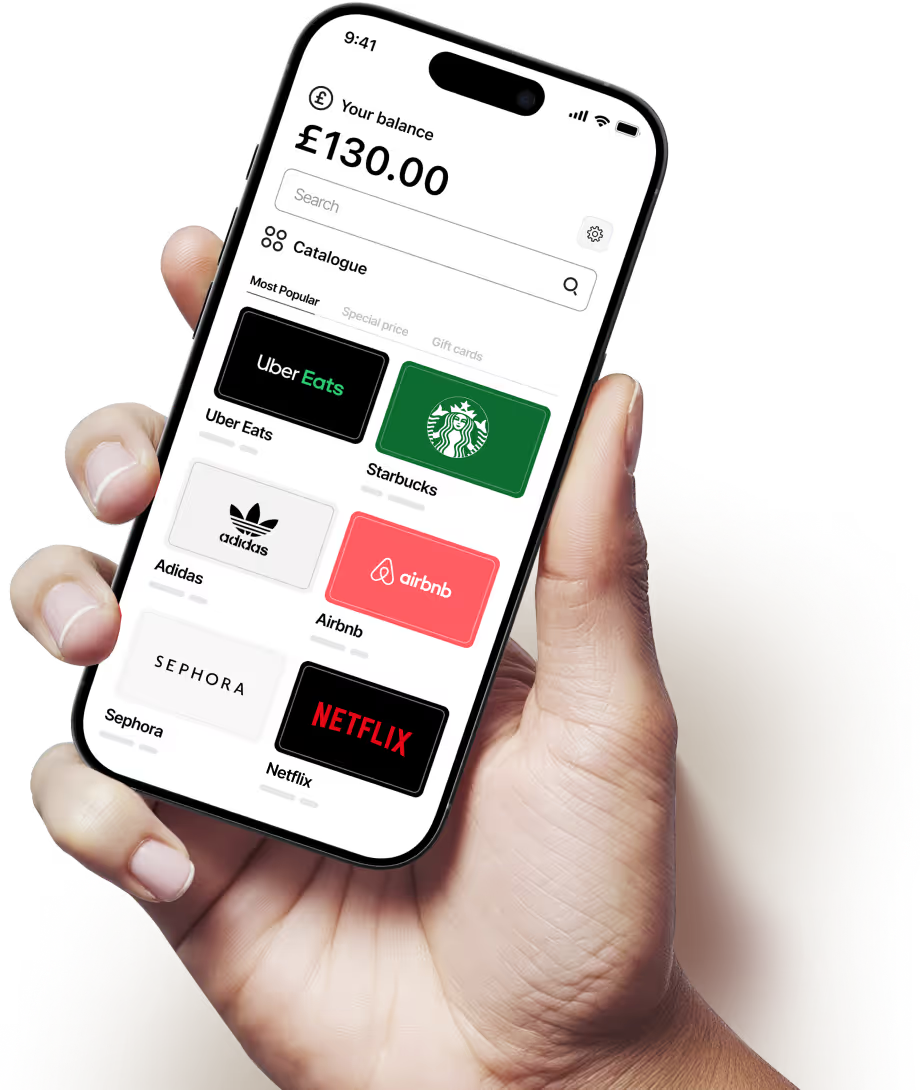
That means access to over 3,000 digital gift card brands across 50+ countries, prepaid Visa and Mastercard options, and multi-choice reward experiences where employees choose from a curated selection that reflects the recognition occasion. Through Totally Curated, organisations can build custom reward collections for different moments: a wellness selection for health milestones, a dining and experiences collection for team celebrations, or a locally relevant set for each office location. The reward experience is fully brandable, so every touchpoint carries the organisation's identity rather than feeling like a third-party afterthought.
Totally's API integrates into existing HR platforms and recognition tools, enabling automated reward delivery triggered by milestones, manager actions, or any custom event. Rewards are delivered instantly, so the moment between recognition and reward feels seamless rather than delayed. Real-time tracking gives People teams visibility into programme activity, redemption patterns, and spend, providing the data needed to measure impact and improve over time.
For organisations where recognition directly affects engagement, retention, and culture, Totally handles the operational complexity so the People team can focus on what matters most: building a programme where employees genuinely feel seen.
If your organisation runs a recognition programme that feels inconsistent, overly manual, or disconnected from the employee experience, a few focused steps will create meaningful improvement.
First, audit your current recognition coverage. Map how frequently recognition happens across teams, managers, and locations. Identify the gaps. If recognition is concentrated in a few teams while others go largely unacknowledged, that inconsistency is likely showing up in your engagement and retention data too.
Second, draw the line between what you'll automate and what you'll keep human. Milestone tracking, delivery logistics, and reporting should be automated. The personal message and the reward selection should remain in human hands, supported by technology that makes both easier and faster.
Third, start with one improvement. Introduce manager prompts for an underrecognised milestone. Curate a reward selection for a specific occasion. Automate delivery for a recognition category that currently involves manual processing. Measure the response over 90 days and use that data to decide where to expand.
Recognition is one of the few workplace investments where the cost is modest and the return is measurable across engagement, retention, and culture. The organisations seeing the strongest results aren't necessarily doing more recognition. They're doing it more consistently, more personally, and with the operational support to sustain it over time.
Want to see how Totally can power your employee recognition programme? Drop us a note!
.avif)