.png)

Let’s build something great
See how Totally’s API can support your reward and payout workflows. Talk to our team to explore your use case, or access our documentation when you’re ready to get started.
Book a Demo
A step-by-step planning guide for HR and People teams, covering budget approval through post-holiday review. Includes an interactive checklist, a digital versus physical comparison, and the data behind why the format of the gift matters more than the value.


HR teams spend an average of 60% of their time on administrative work rather than strategic work, according to APQC benchmarking data across nearly 200 companies. During the holiday season, that admin burden spikes. 64% of People and procurement teams experience severe administrative bottlenecks when ordering corporate gifts less than four weeks before a major holiday, resulting in 15 to 25% higher rush costs, limited inventory, and increased fulfilment errors.
Traditional physical gifting programmes for a mid-sized company consume 40 to 80 hours of HR and operations time across planning, procurement, address collection, packaging, shipping coordination, delivery tracking, and post-holiday reconciliation. Those are hours that carry a significant opportunity cost.
Digital gift card delivery compresses that entire process into under two hours. No mailing addresses to collect. No couriers to coordinate. No inventory to manage. No deliveries to track. The comparison isn't subtle, and it's worth seeing side by side.
The investment in holiday gifting connects directly to the engagement and retention metrics that People teams are measured on.
The holiday season is the most visible recognition moment on the calendar. Getting it right sustains engagement through Q1, a period where energy typically dips and turnover spikes. Getting it wrong, or skipping it entirely, sends a signal that's difficult to reverse with a January team-building exercise or pizza party.
This checklist covers the full process from budget approval through post-holiday review. An interactive version sits further down the page to help keep you organised this Holiday season.
Confirm your total headcount including any contractors, temps, or new starters expected before the holiday. Establish the per-employee denomination. The IRF reports that most employee gift card programmes sit between $25 and $100, with the average at $62. Decide whether the budget covers employees only or extends to clients, partners, and other recipients.
Tax note: gift cards given to employees are generally treated as taxable compensation in most jurisdictions. Some countries offer de minimis exemptions for small-value gifts (the UK's Trivial Benefits rule exempts gifts under £50 from tax and National Insurance, for example). Confirm the tax treatment with your finance team and factor any employer-side tax costs into the budget.
Compile the full list of all recipients: employees, clients, partners, or all three. For employees, simply pull the list from your HRIS. All you need for digital gift card delivery is their first name and their email address. No home mailing addresses. No phone numbers. No dietary requirements.Keeping it super simple.
Decide whether to send a single brand, a curated selection across categories, or a multi-choice card where recipients pick for themselves. The Incentive Research Foundation found that personalisation through choice drives the strongest impact on satisfaction and recall.
If your programme covers multiple countries, choose from locally relevant brands by geography with the Totally platform. Consider including brands across multiple categories: retail, dining, wellness, experiences, tech, entertainment, and prepaid cards for maximum flexibility.
Upload your company's logo and visual identity so every gift card notification carries your brand. Include a personalised message to help make each recipient feel special. Gallup's research identifies personalisation as one of the five pillars of strategic recognition: a generic "Happy Holidays from the team" doesn't carry the same weight as a message that acknowledges the individual.
Decide whether the message comes from the CEO, the department head, or their direct line manager. For smaller teams, individual notes from managers add a layer of personalisation that scales well with digital delivery.
Most employees prefer to receive holiday gifts in December, particularly mid-to-late month. Schedule delivery for a date that allows people to enjoy the gift before the holiday break. Mid-December avoids both the "too early to feel festive" problem and the "clearly last-minute" perception.
Digital delivery means you can set the exact date and time. Every recipient receives their gift simultaneously, regardless of location or time zone. No early arrivals spoiling the surprise.
On send day, monitor the dashboard for delivery confirmations. Have a brief internal communication ready so that managers know the gifts are going out. A Slack message or email to leadership saying "holiday gift cards have been sent to all employees, please don't mention before [time] if we're doing a coordinated announcement" takes 30 seconds and avoids someone accidentally spoiling the Holiday cheer.
New starters who join after the initial send, clients who close a deal in December, or recipients who were accidentally missed from the original list. Digital delivery means adding someone to the programme takes minutes, not a separate procurement and shipping cycle. Keep the catalogue and message template active through the end of December so late additions are easy and straightforward.
Monitor your campaign data through your dashboard. Which brands are employees choosing most? How quickly are they redeeming? This data directly informs next year's programme: if 40% of recipients chose dining brands, your next catalogue should have strong dining coverage. If redemption is slow, the message or denomination may need adjusting.
Run a brief survey asking recipients about their experience: did the gift feel personal, was the brand selection relevant, would they prefer anything different next year?
Document what worked and what you'd change. Budget, timing, catalogue composition, message approach, and any operational issues. This becomes the starting brief for next year's programme, turning a one-off December project into a repeatable, improving process.
Totally provides the infrastructure for HR and People teams that want to send personalised, branded digital gift cards for the holidays without the operational overhead that physical gifting demands.
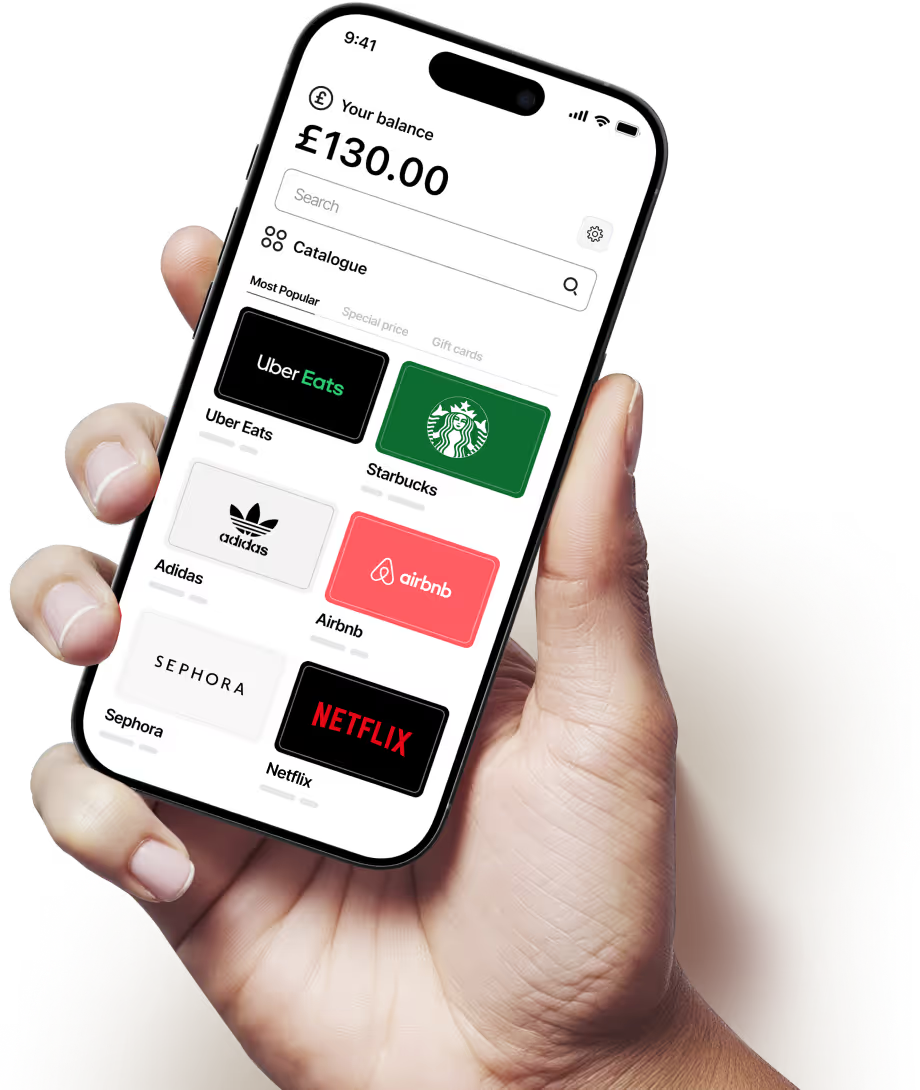
3,000+ digital gift card brands across 50+ countries. Retail, dining, entertainment, gaming, streaming, experiences, wellness, and prepaid Visa and Mastercard. The catalogue surfaces locally relevant brands based on each recipient's location.
Multi-choice reward experiences. Define a curated holiday catalogue. Recipients browse and select their preferred brand.
Full branding on every touchpoint. Your logo, your colours, your design on the notification, the selection interface, and the redemption confirmation.
Personalised messages at scale. Individual notes on every send, from shared leadership messages to manager-specific acknowledgements.
Instant delivery, scheduled or immediate. Upload a recipient list, personalise, schedule, and the entire programme executes without further manual intervention.
Real-time tracking and reconciliation. Delivery status, brand preferences, and spend across all recipients and markets. One dashboard. No spreadsheet.
CSV upload or API integration. One-off holiday sends via CSV. Ongoing programmes via API connected to your HRIS.
Whether you're gifting 50 employees or 5,000 across 20 countries, the process takes minutes and the recipient experience feels thoughtful and personal for every individual.
When should HR start planning employee holiday gifts?
Eight to ten weeks before the holiday is the recommended starting point for budget approval, recipient list compilation, and catalogue selection. 64% of People teams experience bottlenecks when planning starts less than four weeks out. Digital gift cards eliminate shipping lead times but planning time for budget approval, branding, and personalisation still applies.
How much should a company spend on holiday gifts per employee?
The Incentive Research Foundation reports that most employee gift card programmes sit between $25 and $100 per recipient, with the average at $62. The format matters more than the amount: a well-branded $25 digital gift card with a personalised message often creates a stronger impression than a $100 generic gesture.
Are employee gift cards taxable?
In most jurisdictions, gift cards given to employees are treated as taxable compensation. Some countries offer exemptions for small-value gifts (the UK's Trivial Benefits rule exempts gifts under £50 per occasion from tax and National Insurance). Tax treatment varies by country, so confirm with your finance team and ensure your gift card platform supports the relevant reporting.
What is the best type of corporate holiday gift?
44% of employees rate gift cards as the best reward to receive according to the Incentive Research Foundation. Multi-choice digital gift cards consistently drive the highest satisfaction because the recipient selects from a curated catalogue rather than receiving a predetermined item.
How do you send holiday gift cards to employees in multiple countries?
Through a platform like Totally that offers 3,000+ digital gift card brands across 50+ countries. The catalogue automatically surfaces locally relevant brands based on each recipient's location, rewards are denominated in local currency, and tax compliance is managed at the platform level.
How long does it take to set up a digital gift card programme?
With Totally, the full setup (catalogue selection, recipient upload, branding, personalisation, and scheduling) takes under two hours. Traditional physical gifting programmes consume 40 to 80 hours across planning, procurement, logistics, and reconciliation.