

Let’s build something great
See how Totally’s API can support your reward and payout workflows. Talk to our team to explore your use case, or access our documentation when you’re ready to get started.
Book a Demo
A practical guide to holiday gifting that works for every employee regardless of religion, culture, dietary requirements, or location. Covering the five dimensions of inclusive gifting and why multi-choice digital gift cards solve most of them by design.

.png)
A company-wide hamper arrives in December. Inside: a bottle of prosecco, a selection of chocolates, and a pork-based charcuterie board.
For some employees, it's a lovely gesture. For the colleague who doesn't drink for religious reasons, the team member with a nut allergy, the employee who keeps halal, and the person in your Singapore office who received it two weeks late via international shipping, the gesture communicates something unintended: we didn't think about you.
Deloitte's research found that inclusion in the workplace increases employee engagement by up to 83%. Organisations with inclusive cultures are 8x more likely to achieve better business outcomes. And 7 in 10 Millennial and Gen Z employees are more likely to stay for five or more years at a company with a diverse and inclusive workforce, with 52% considering leaving within two years if those expectations aren't met.
Holiday gifting is one of the most visible expressions of company culture. When it's inclusive, it reinforces belonging. When it's not, the gap between the company's stated values and the employee's lived experience becomes difficult to ignore.
This guide covers the dimensions of inclusivity that HR and People teams need to consider in holiday gifting, the common mistakes that inadvertently exclude team members, and how digital gift cards with recipient choice solve most of these challenges by design.
Inclusive gifting isn't a single consideration. It spans religion, culture, dietary requirements, geography, and personal preference. Each dimension carries its own set of assumptions that a well-intentioned gift can trip over.
The holiday season itself is not universally observed. Christmas, Hanukkah, Kwanzaa, Diwali, Eid, Lunar New Year, and the solstice all fall within different windows, carry different traditions, and hold different levels of significance across your workforce. Framing a gifting programme as a "Christmas gift" when 30% of your team doesn't celebrate Christmas immediately narrows who feels included.
Alcohol is the most common exclusion. Employees who abstain for religious reasons (Islam, certain Christian denominations, Buddhism, Mormonism, Sikhism, among others) receive a gift they cannot and will not use. The intention was generous. The experience was exclusionary.
Certain symbols, imagery, and even colours carry religious connotations that vary across faiths. A gift wrapped in red and green with Christmas-themed branding may feel festive to some employees and alienating to others.
Practical guidance: frame the programme as a "holiday" or "end of year" gift rather than a Christmas gift. Avoid alcohol and religiously specific imagery in the gift itself. And where possible, let the employee choose from a range of options so they select something that aligns with their own observances and values.
Gift-giving norms vary significantly across cultures in ways that most Western-centric gifting programmes don't account for.
Public recognition is valued in some cultures and deeply uncomfortable in others. The number, colour, and type of items given carry specific meanings in different traditions: white flowers signal mourning in parts of East Asia, certain numbers are considered unlucky, and the manner of presentation (one hand versus two, wrapping style, formality of delivery) all matter.
The concept of an appropriate gift value also shifts across cultures. A denomination that feels generous in one market may feel excessive or modest in another, and the social expectation around reciprocity (whether the recipient feels obligated to give something back) varies.
Practical guidance: avoid gifts that require cultural knowledge you don't have. A gift card where the employee chooses their own brand sidesteps the risk of selecting something culturally inappropriate, because the decision transfers to the person who understands their own context best.
Food gifts are among the most popular corporate holiday gifts and among the most likely to exclude.
Halal requirements, kosher dietary laws, vegetarian and vegan lifestyles, nut allergies, gluten intolerance, lactose sensitivity, and alcohol abstention all affect whether a food-based gift can be consumed. For a company of 200 people, the overlap of these requirements across the team can make it operationally impossible to select one food gift that works for everyone.
Even non-food physical gifts carry lifestyle assumptions. Leather goods exclude vegans. Certain beauty products conflict with ingredient sensitivities or ethical sourcing preferences. Fitness equipment assumes interest and physical ability.
Practical guidance: if you're giving a physical gift, provide options and check for restrictions. If you're giving a digital gift card, include categories beyond food (wellness, experiences, retail, tech, entertainment) so every employee has options that work for their lifestyle.
For organisations with employees in multiple countries, a gift that works in your headquarters market may not work elsewhere.
A gift card to a UK retailer has no value for an employee in Germany. A hamper shipped from London to Dubai arrives late, incurs customs charges, and may contain items that aren't appropriate for the local market. A gift denominated in GBP creates confusion for a recipient in the US or Japan about what the gift is actually worth in their currency.
Time zones create unequal experiences from the same gesture. A company-wide gifting announcement at 3pm GMT reaches London during working hours, Singapore at 11pm, and San Francisco at 7am. The gift that was supposed to make everyone feel equally valued instead creates a hierarchy of experience based on geography.
Practical guidance: the gift format should adapt to the recipient's location rather than requiring every recipient to adapt to the sender's market. Local brand availability, local currency denomination, and simultaneous delivery regardless of time zone are the minimum requirements for geographic inclusivity.
Beyond religion, culture, diet, and geography, employees are individuals with distinct personal preferences.
Some people love receiving experiences. Others prefer something practical. Some want flexibility to choose their own gift. Others appreciate a curated selection that shows someone put thought into the options. Some employees have physical disabilities that affect what gifts are useful or accessible to them.
A programme that selects one gift for everyone treats the workforce as homogeneous when it isn't. The 70% of employees who have received an unwanted corporate gift experienced a moment where the company's gesture highlighted how little it knew about them as a person.
Practical guidance: choice resolves personal preference at scale. A multi-choice digital gift card covering multiple categories gives every employee a path to something they personally value, without requiring the HR team to know the individual preferences of every person in the organisation.
Most of the inclusivity challenges described above share a common root: someone at the company is making assumptions about what the recipient wants, observes, eats, or values.
Multi-choice digital gift cards invert that dynamic. Instead of the company choosing for the employee, the employee chooses for themselves. The company controls the quality, the budget, and the presentation. The employee controls the outcome.
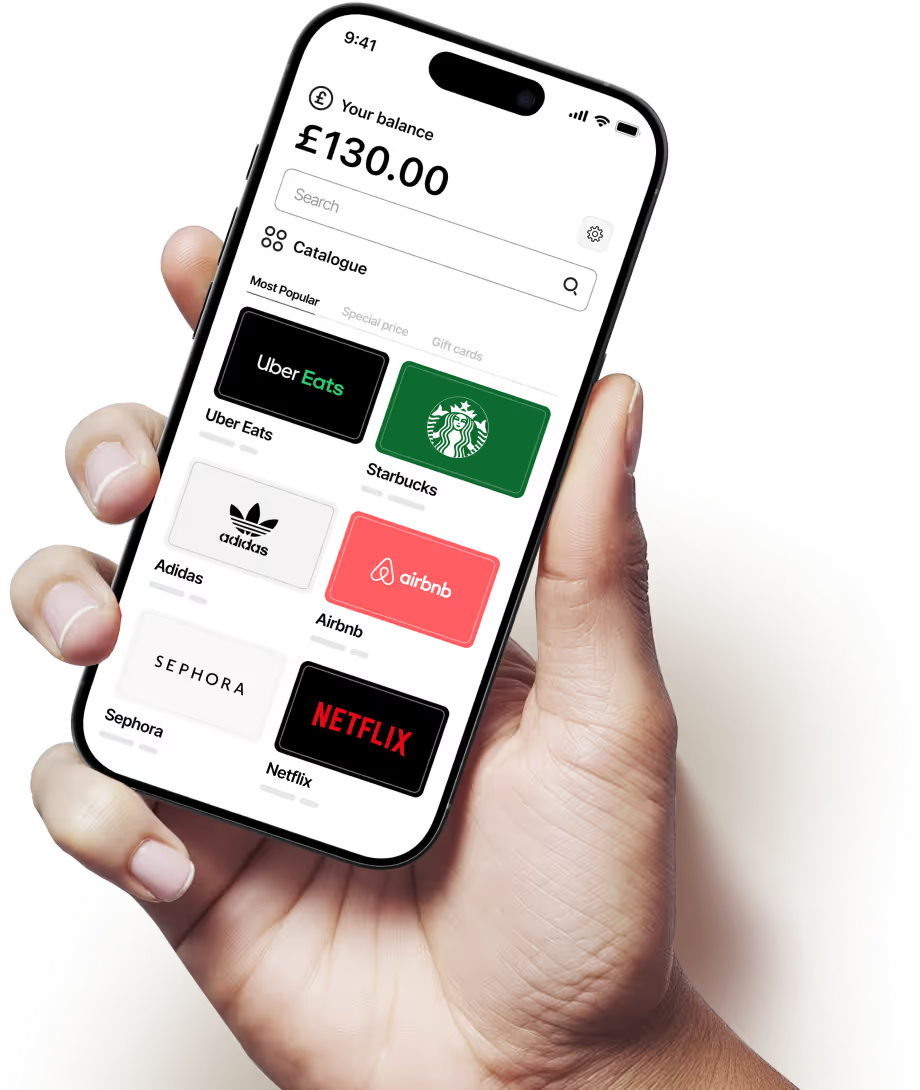
A multi-choice catalogue spanning retail, dining, wellness, experiences, tech, entertainment, and prepaid card options covers the full range of preferences without the company needing to anticipate each one. The employee who observes Ramadan selects something appropriate for them. The vegan chooses a brand that aligns with their values. The employee in Tokyo sees Japanese brands in their local currency. The person who wants maximum flexibility picks a prepaid Visa. Nobody receives a gift they can't use, because nobody received a gift they didn't choose.
This is inclusivity by design rather than inclusivity by committee. No survey required. No dietary preference spreadsheet. No cultural research project. The format itself handles the diversity.
Frame the programme as "holiday" or "end of year" recognition rather than "Christmas." Review every touchpoint (the announcement, the email notification, the message template, the landing page) for language or imagery that centres one tradition over others.
Build a catalogue that spans at least four or five categories: retail, dining, wellness, experiences, tech and entertainment, and a flexible prepaid option. This ensures every employee, regardless of background or preference, has meaningful options.
If your programme spans multiple countries, the catalogue should surface brands that are locally relevant in each market. A catalogue built for the UK doesn't serve an employee in the US or the Middle East. The platform should handle this automatically based on recipient location rather than requiring the HR team to research each market separately.
A gift of £50 should feel like £50 worth of value to a recipient in the UK and equivalent value to a recipient in Poland, the UAE, or Japan. Currency conversion confusion or visible FX fees erode the gesture.
Write a message that's genuine, warm, and acknowledges the person without making assumptions about their background. Let the gift selection be where the personalisation happens: the employee picks what's right for them.
If the gift lands at different times for different people, geographic location becomes a visible hierarchy. Digital delivery scheduled for a specific date and time ensures every recipient, regardless of where they sit, receives the gift at the same moment.
Totally is built for organisations that want to send a single holiday gift programme to a diverse, global workforce without inadvertently excluding anyone.
3,000+ digital gift card brands across 50+ countries. Retail, dining, wellness, experiences, tech, entertainment, and prepaid Visa and Mastercard. The catalogue automatically surfaces locally relevant brands based on each recipient's location, so an employee in London sees UK brands, an employee in New York sees US brands, and an employee in Dubai sees brands relevant to their market.
Multi-choice reward experiences. Define a curated holiday catalogue spanning multiple categories. Every employee selects the brand and category that works for them. No assumptions about religion, diet, culture, or preference. The choice is theirs.
Local currency denomination. Rewards are delivered in the recipient's local currency so the value feels consistent regardless of geography.
Fully brandable and personalised. Your company's identity on every touchpoint. Personalised messages from leadership or direct managers. The experience feels like it comes from your organisation while the recipient controls the outcome.
Instant delivery worldwide. Every employee receives their gift at the same time regardless of location. No shipping delays. No customs. No geographic hierarchy.
Compliance managed by territory. Tax treatment and regulatory requirements are handled at the platform level across all supported markets.
For organisations that want every employee to feel genuinely valued during the holiday season, regardless of where they are, what they observe, or what they eat, Totally provides the infrastructure to make that happen without the operational complexity of managing it manually.
Read to build an inclusive employee holiday gifting programme? Book a call with one of our experts.
How do you make employee holiday gifts inclusive?
Use inclusive language ("holiday" rather than "Christmas"), avoid alcohol and religiously specific items, offer multi-choice formats so employees select what works for them, ensure local brand relevance for international teams, and denominate in local currency. Multi-choice digital gift cards handle most of these by design because the recipient makes the selection.
What corporate holiday gifts work for a diverse workforce?
Multi-choice digital gift cards spanning retail, dining, wellness, experiences, tech, and prepaid card options are the most inclusive format because every employee selects something personally relevant. 44% of employees rate gift cards as the best reward to receive according to the Incentive Research Foundation.
How do you handle holiday gifts for employees in multiple countries?
Through a platform like Totally that offers 3,000+ brands across 50+ countries, with locally relevant catalogues surfaced automatically by recipient location and rewards denominated in local currency. Instant digital delivery ensures every employee receives their gift simultaneously regardless of time zone.
Should companies avoid Christmas-themed gifts?
For diverse workforces, framing the programme as "holiday" or "end of year" recognition rather than "Christmas" is more inclusive. This doesn't mean avoiding festive warmth, but centring the programme around one religious tradition when your workforce spans many can make some employees feel excluded.
What holiday gifts should companies avoid?
Alcohol (excludes employees who abstain for religious or personal reasons), food items without dietary consideration (halal, kosher, vegan, allergen), gifts with strong religious imagery, single-brand cards for retailers the employee may not use, and physical items that require shipping across multiple countries with varying customs and dietary requirements.
Why are digital gift cards more inclusive than physical gifts?
Physical gifts require the sender to make assumptions about the recipient's preferences, dietary needs, cultural norms, and lifestyle. Digital gift cards with multi-choice selection transfer that decision to the recipient. The company controls the budget and presentation. The employee controls what they receive. No assumptions. No exclusions.