.png)


Let’s build something great
See how Totally’s API can support your reward and payout workflows. Talk to our team to explore your use case, or access our documentation when you’re ready to get started.
Book a Demo
Four trends are reshaping corporate holiday gifting in 2026: recipient choice over one-size-fits-all, sustainability moving from optional to expected, digital delivery becoming the global default, and the shift from seasonal gesture to year-round recognition.


Three shifts are reshaping how companies approach holiday gifting this year. The move toward recipient choice over employer-selected gifts. A rising expectation around sustainability and values-led gifting. And the operational reality that digital delivery has become the default for distributed, global workforces.
None of these are brand new. What's changed in 2026 is scale. Digital gifting adoption has increased 41% year-on-year. Demand for personalised gifts has grown 42%. Eco-friendly gift adoption is up 37%. And digital gift card usage has expanded 39%. These aren't niche preferences anymore. They're the baseline expectation from employees, clients, and partners.
For HR and People teams planning this year's holiday programme, understanding where these trends are heading, and which ones carry real engagement data behind them, is the difference between a programme that resonates and one that feels like last year's approach reheated.
The era of selecting one gift and distributing it identically to every person in the company is ending, and the data explains why.
A Custom Ink survey of 1,051 US employees conducted by Qualtrics found that 52% would rather choose from several gift options than receive a predetermined gift. 82% said they value a personalised gift more than a generic one. And Great Place to Work research found that 37% of employees said more personal recognition would encourage them to produce better work more often.
The Incentive Research Foundation confirms this at the programme level: personalisation through choice drives the strongest impact on satisfaction and recall. 44% of employees rate gift cards as the best reward to receive. Not because a gift card is inherently exciting, but because the act of choosing creates ownership over the experience. The employee picks the brand that matters to them, spends the value on something they genuinely want, and remembers the moment more vividly than they would a generic item they had no say in receiving.
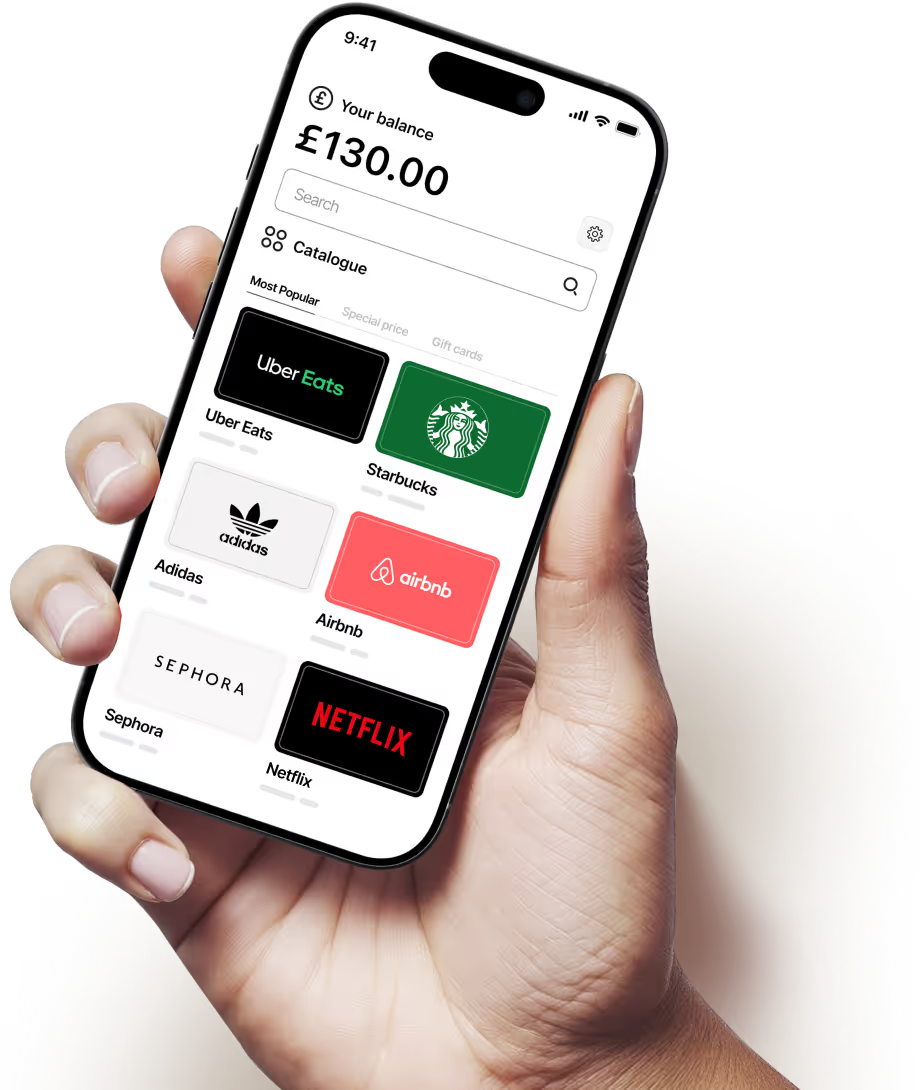
Multi-choice digital gift cards take this further. Rather than sending a single-brand card and hoping it suits everyone, a multi-choice format presents the employee with a curated catalogue spanning retail, dining, wellness, experiences, tech, entertainment, and prepaid card options. The company controls the budget and the quality of the selection. The employee controls the outcome.
For clients and partners, the same principle applies. A startup founder and a procurement lead at a FTSE 100 company have different tastes. Letting each person choose what suits them removes the guesswork and ensures the gesture lands well regardless of who's receiving it.
Sustainability in corporate gifting used to be a differentiator. In 2026, it's closer to a hygiene factor.
PPAI's Product Power research across 5,000+ US consumers found that 68% name recycled or reusable materials as their top sustainability preference in corporate gifts. 49% said a brand's eco commitment directly affects how much they trust it. Deloitte's UK consumer research found 36% willing to pay more for sustainable products and services. And IBM's sustainability study reports that over 70% of consumers prefer brands that act sustainably.
These numbers reflect consumer sentiment, but they map directly onto the employee and client experience. When a company sends a physical gift that involves excessive packaging, international shipping, and items that end up unused, the environmental signal conflicts with whatever sustainability commitments the company communicates the rest of the year.
Digital gift cards sidestep this entirely. No packaging. No shipping. No physical production of items that may not be wanted. No courier emissions from cross-border delivery. No waste from unwanted gifts sitting in a drawer. The environmental footprint of a digital gift card is the energy required to send an email. For organisations with published sustainability targets, this alignment between the gifting programme and the company's environmental position is increasingly important.
This doesn't mean physical gifts are off the table. But for companies that want their holiday gifting to reflect their sustainability values, digital delivery is the format that walks the talk most consistently.
When teams were concentrated in a few offices, physical gift distribution was manageable. Someone ordered 200 of the same thing, stacked boxes in the lobby, and everyone picked theirs up before the holiday break.
That model doesn't work for a company with employees in London, Berlin, Dubai, Singapore, and San Francisco. And in 2026, that describes a significant and growing proportion of mid-market and enterprise businesses.
Digital gift card delivery solves the logistics that make global physical gifting prohibitively complex.
No addresses to collect. All you need is a name and an email address. No home addresses, no phone numbers, no chasing non-respondents across time zones.
Instant, simultaneous delivery. Every recipient receives their gift at the same moment regardless of location. No staggered shipping. No gifts arriving in January. No customs delays or courier failures.
Locally relevant catalogues. A platform like Totally surfaces brands that are relevant in each recipient's market automatically. An employee in London sees UK brands. An employee in New York sees US brands. An employee in Tokyo sees Japanese brands. The HR team doesn't need to research brand availability in each country separately.
Local currency denomination. The gift value is presented in the recipient's own currency. No confusion about conversion rates. No visible FX fees eroding the gesture.
Automated scheduling. Set the delivery date in advance and the programme executes without further manual intervention. For HR teams managing a hundred other December priorities, the programme running itself is the point.
Deloitte's holiday retail survey found that gift cards tied with clothing and accessories as the top gift category among US consumers. Digital gift cards specifically are growing 2.5x faster than physical formats. The trend is clear, and the operational advantages for global teams make it an easy decision.
The companies with the strongest engagement scores aren't treating holiday gifting as a standalone event. They're using December as the anchor moment in a year-round recognition programme.
Gallup's research on recognition frequency is unambiguous: employees who receive recognition only a few times a year are five times more likely to be actively disengaged than those recognised regularly. Companies in the top quartile for engagement are 23% more profitable. The data doesn't support a model where recognition happens once in December and then goes quiet until the following December.
The practical shift happening in 2026 is that HR teams setting up holiday gifting are simultaneously building the infrastructure for ongoing recognition. Birthdays, work anniversaries, onboarding milestones, performance achievements, and peer-to-peer acknowledgement all run through the same platform, the same branding, and the same delivery mechanism. The holiday programme becomes the most visible moment in a system that operates year-round.
For organisations evaluating a holiday gifting solution, this trend matters because it changes the buying criteria. A platform that handles December well but can't support ongoing automated recognition through API integration with your HRIS or communication tools is solving a seasonal problem when the strategic opportunity is building a recognition culture.
Four practical takeaways for HR and People teams planning this year's holiday gifting.
Default to choice. 52% of employees would rather choose their own gift. Multi-choice digital gift cards satisfy this preference without adding operational complexity. Define the catalogue and the budget. Let the recipient handle the rest.
Align gifting with your sustainability position. If your company has environmental commitments, the holiday gifting programme should reflect them. Digital delivery eliminates packaging, shipping, production waste, and the emissions associated with physical distribution. The alignment is immediate and visible.
Build for global from the start. Even if your team is predominantly in one country today, building the programme on a platform that handles multiple markets means you won't need to rebuild when the team grows internationally. Local brand relevance, local currency, and compliance across territories should be built into the infrastructure rather than bolted on later.
Use December to set up the full year. While you're configuring the holiday programme, connect the platform to your HRIS for automated birthday and anniversary recognition. The effort to set up year-round recognition alongside holiday gifting is marginal. The engagement impact of consistent, timely recognition across the full year is significant.
Totally is built for HR and People teams that want a holiday gifting programme reflecting where corporate gifting is heading, not where it's been.
Multi-choice reward experiences. 3,000+ digital gift card brands across 50+ countries. Recipients browse a curated catalogue and choose the brand that's right for them. Retail, dining, wellness, experiences, tech, entertainment, and prepaid Visa and Mastercard options. The company controls the quality and the budget. The employee controls the decision.
Zero physical waste. Digital delivery means no packaging, no shipping, no courier emissions, and no unwanted items. For organisations with sustainability commitments, the gifting programme aligns with the values the company communicates the rest of the year.
Global delivery from one platform. Locally relevant brands surfaced automatically by recipient location. Local currency denomination. Instant delivery to anyone, anywhere. One upload covers every market your team operates in.
Year-round recognition infrastructure. The same platform handles holiday gifting, birthday recognition, work anniversaries, performance rewards, and peer-to-peer acknowledgement. API integration with your HRIS automates ongoing recognition so the programme runs year-round without adding admin.
Full branding and personalisation. Your company's visual identity on every touchpoint. Personalised messages from leadership or direct managers. The experience feels like it comes from your organisation.
Real-time tracking. Delivery status, redemption rates, brand preferences, and programme spend. One dashboard for the holiday programme and everything that follows.
Ready to build your Corporate Holiday Gifting Programme? Book a call with one of our experts.
What are the biggest corporate Christmas gifting trends in 2026?
Four trends are defining 2026: recipient choice over employer-selected gifts (52% prefer choosing their own), sustainability and values-led gifting (68% prefer eco-friendly materials), digital and global delivery as the operational default, and the shift from once-a-year gestures to year-round recognition programmes.
Why are digital gift cards the most popular corporate gift format?
Digital gift cards combine recipient choice, instant delivery, zero physical waste, and global scalability. 44% of employees rate them as the best reward to receive according to the Incentive Research Foundation, and digital formats are growing 2.5x faster than physical.
How do you make corporate gifts sustainable?
Digital gift card delivery eliminates packaging, shipping, production waste, and courier emissions entirely. For organisations with environmental commitments, digital gifting aligns the holiday programme with the sustainability position the company maintains the rest of the year.
Should companies let employees choose their own Christmas gift?
The data strongly supports it. 52% of employees prefer choosing from several options, and the IRF found that personalisation through choice drives the strongest impact on satisfaction and recall. Multi-choice digital gift cards offer curated selections while letting each employee decide.
How do you send holiday gifts to employees in multiple countries?
Through a platform like Totally that offers 3,000+ digital gift card brands across 50+ countries. The catalogue surfaces locally relevant brands by recipient location, rewards are denominated in local currency, and every employee receives their gift simultaneously regardless of time zone.
Should holiday gifting be part of a year-round recognition programme?
Gallup's research shows that employees recognised only a few times a year are 5x more likely to be actively disengaged. Using the holiday programme as the anchor moment in year-round recognition delivers stronger engagement outcomes than treating December as a standalone event.